For enterprises moving beyond a pilot phase, integrating AI Gemini Enterprise is less about selecting a model and more about constructing a resilient, secure, and cost-efficient operational backbone. A production deployment demands an architecture that can manage traffic, protect sensitive data, optimize performance, and provide clear visibility into usage and costs. This article details the essential backend components required to transform a simple Gemini API call into an enterprise-grade service.
Overview: The Production Stack Beyond a Simple API Key
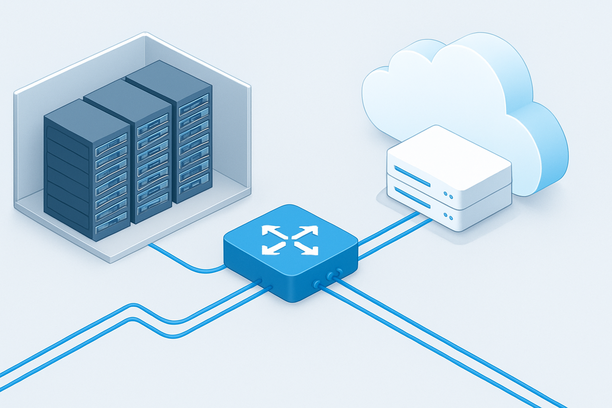
When AI Gemini Enterprise is deployed for mission-critical applications, calling the Google API directly from application code is an anti-pattern. A production-grade implementation requires an intermediary backend layer. This layer, often centered around a dedicated API gateway, handles authentication, request routing, caching, rate limiting, and logging before forwarding the request to the Gemini endpoint. This architecture provides the control, security, and observability enterprises need to manage AI as a scalable, auditable service.
What Components Form a Robust AI Gemini Enterprise Gateway?
An effective enterprise gateway for Gemini is composed of several distinct services working together. It is not a single piece of software but a logical architecture that can be implemented with various tools.
Core components include:
- Ingress Controller & Load Balancer: The entry point that distributes incoming traffic across multiple gateway instances, ensuring high availability and preventing a single point of failure.
- API Management Layer: The central brain handling authentication (e.g., OAuth2, API keys), authorization policies, request transformation, and schema validation. It enforces who can access the service and under what rules.
- Caching Layer: A critical performance and cost-optimization component. It stores responses to identical prompts, avoiding redundant (and expensive) calls to the Gemini API for the same queries. This is especially valuable for internal tools with common queries.
- Rate Limiter & Circuit Breaker: Protects both your systems and your Google Cloud budget. The rate limiter enforces per-user or per-team request quotas. The circuit breaker automatically stops sending requests to Gemini if the API starts returning errors or latency exceeds thresholds, preventing cascading failures.
- Logging, Monitoring, and Analytics Pipeline: Every request and response metadata is funneled into a system (like ELK Stack, Prometheus/Grafana, or a cloud-native solution) for real-time monitoring, cost attribution, debugging, and long-term analytics.
Architectural Patterns: Proxy Gateway vs. Model Router
The implementation of this backend can follow different patterns depending on your strategy.
| Pattern | Description | When to Use |
|---|---|---|
| Proxy Gateway | A single, unified endpoint that proxies all requests to a specific AI provider (Google Gemini in this case). All traffic is directed through this one chokepoint. | Ideal for consolidating control. Perfect when your enterprise standardizes on a primary AI provider and needs a single point for security, monitoring, and cost management for all Gemini-related activity. |
| Model Router | A more advanced gateway that can dynamically route requests to different AI backends (e.g., Gemini, Azure OpenAI, a self-hosted Llama model) based on task type, cost, latency, or compliance rules. | Essential for a multi-AI strategy. Use this when you need to compare model performance for similar tasks, require fallback options during outages, or route sensitive data to a self-hosted model while using Gemini for less critical workloads. |
Implementing a model router adds significant flexibility but also complexity. It requires maintaining adapters for each AI backend and defining routing logic. However, it future-proofs your infrastructure against vendor lock-in and allows for sophisticated cost optimization.
The Critical Role of Server and Network Infrastructure
The gateway and its supporting components need a home. Whether you deploy this stack on public cloud VMs or on dedicated bare-metal servers, the underlying infrastructure has a direct impact on performance, security, and total cost of ownership.
- For Low-Latency Inference: If your application requires sub-100ms response times, network proximity is key. Deploying your gateway in a cloud region with a fast, private peering connection to Google's network minimizes internet hops. Alternatively, for ultimate control, placing your gateway on a dedicated server in a data center known for excellent peering can offer predictable performance.
- For Data Sovereignty: If compliance mandates that prompts and responses must not traverse the public internet, you need a private network path. This could involve a dedicated interconnect or, more commonly, hosting the entire pipeline within a private network that only connects to the Gemini API via a controlled egress point. This is a common requirement in finance and healthcare.
- For Cost Predictability at Scale: While cloud VMs offer flexibility, their costs can become unpredictable with high, sustained throughput. Dedicated servers (like GPU or high-performance CPU servers from a provider such as RAKSmart) offer fixed monthly costs, making budgeting straightforward for known, consistent workloads. They also provide full root access, allowing for custom kernel tuning, security hardening, and specific driver configurations that managed clouds may restrict.
Decision Checklist: Are You Ready for a Production Backend?
Before commissioning infrastructure, use this framework to assess your readiness.
- Authentication & Access Control: Do we need to issue unique API keys or tokens to different teams or applications to track usage and enforce permissions?
- Cost Management & Allocation: Is there a business need to attribute AI spending to specific projects, departments, or cost centers?
- Data Privacy & Compliance: Does our use case involve Personally Identifiable Information (PII) or regulated data that requires audit logs of all interactions and potentially masking before sending to the API?
- Performance & Reliability: Is the AI feature part of a critical user-facing path where downtime or high latency would result in significant business impact?
- Observability: Do our operations teams need real-time dashboards showing error rates, latency percentiles, token usage, and cost per hour to manage the service effectively?
If you answered "Yes" to most of these questions, building a dedicated backend is not optional—it is a core requirement for a sustainable and governed AI deployment.
Frequently Asked Questions
How does a gateway improve security compared to direct API calls from our app?
A gateway acts as a single, hardened point of entry. It centralizes security policies, so you don't have to manage complex authentication logic in every application. It can mask your actual API key, apply IP allow-listing, and ensure all requests are validated and logged, significantly reducing your attack surface.
What kind of hardware is needed to host the AI gateway itself?
A production gateway does not necessarily require GPUs. It is primarily a network and application processing workload. A modern multi-core CPU server with sufficient RAM (e.g., 32GB+) and fast networking (10GbE or higher) is typically adequate. The specific needs depend on your expected request volume and the complexity of your routing and transformation logic.
How can we control costs if our AI usage is unpredictable?
Implement a combination of rate limiting and alerting at the gateway level. Set hard limits per API key and configure alerts in your monitoring system when usage approaches a predefined budget threshold. The caching layer is also a powerful tool for reducing costs on repeated queries.
Is a self-hosted alternative to Gemini necessary if we use a gateway?
Not inherently. A gateway like a proxy gateway still proxies to the official Gemini API. A self-hosted alternative becomes relevant if you need to run a different model entirely (like Gemma) on your own hardware due to extreme data sensitivity, custom fine-tuning requirements, or to achieve ultra-low latency by colocating the model with your application servers.
How do we begin monitoring costs and usage effectively?
Start by implementing the logging pipeline as the first component. Capture metadata like request ID, timestamp, user ID (if applicable), and token counts. Feed this data into a time-series database and build a basic dashboard that shows daily token usage and estimated cost. This provides immediate visibility before layering on more advanced cost attribution.
Conclusion and Next Steps
Constructing the enterprise backend for AI Gemini transforms a powerful model into a manageable, auditable, and scalable business service. By implementing a robust architecture centered on a gateway with caching, monitoring, and governance controls, you mitigate risks, optimize spending, and ensure reliable performance for critical applications.
For organizations needing dedicated infrastructure to host this gateway stack or to explore self-hosted model deployments for enhanced control, evaluating high-performance server options is a logical next step. Providers offering bare-metal servers in strategic global locations can provide the predictable costs and root-level access required for such specialized AI infrastructure.