Overview
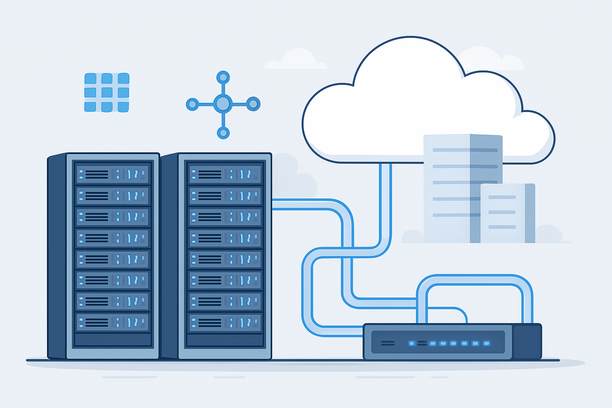
Google Studio AI pricing operates on a pay-per-token model, where your bill scales with the volume and complexity of prompts processed by Gemini models. However, token cost is only the visible fraction of your total spend. A production-grade AI application also requires backend orchestration servers, reliable network connectivity, data storage, and monitoring — each adding to the bottom line. This guide provides a practical framework for calculating your true total cost of ownership (TCO) and identifies specific infrastructure decisions that can either inflate or optimize your monthly bill.
How Are Google Studio AI Token Prices Structured?
Google Studio AI charges are token-based, with separate rates for input tokens (your prompts and context) and output tokens (the model's generated responses). Different Gemini model tiers carry different per-token costs, reflecting their underlying computational complexity.
The flagship Gemini 1.5 Pro model commands a premium price because it handles complex reasoning, code generation, and long-context analysis requiring substantial compute resources. Gemini 1.5 Flash, optimized for speed and high-volume tasks, runs on leaner infrastructure and costs less per token. Gemini 1.0 Pro sits in the middle, offering balanced performance at moderate rates.
A critical nuance is the long-context pricing tier: when your request exceeds a certain token threshold, the per-token rate increases. This means a single large document analysis request can cost significantly more than multiple shorter interactions totaling the same token count.
Here is a simplified comparison of pricing tiers:
| Model Tier | Best For | Relative Input Cost | Relative Output Cost |
|---|---|---|---|
| Gemini 1.5 Flash | High-volume, low-latency tasks | Low | Low |
| Gemini 1.0 Pro | Balanced general-purpose use | Medium | Medium |
| Gemini 1.5 Pro | Complex reasoning, long documents | High | High |
Direct answer: Your token cost is determined by three factors — which model you choose, how many tokens you process, and whether your requests exceed the long-context threshold. Optimizing any one of these reduces your bill.
What Hidden Infrastructure Costs Does Google Not Bill You For?
The API token price covers model inference, but your application needs surrounding infrastructure to function. These costs are invisible in your Google billing dashboard but real in your monthly expenses.
API orchestration servers handle incoming user requests, construct properly formatted API calls to Google, manage authentication, parse responses, and deliver results. A misconfigured or underpowered orchestration server introduces latency that users experience as a slow AI, regardless of how fast the Gemini model itself responds.
Network connectivity between your server and Google's API endpoints directly affects response times and reliability. Each API call traverses a network path; poor routing adds hundreds of milliseconds of latency. For applications serving users in mainland China, connecting to Google's endpoints requires careful consideration of network route quality, since standard international BGP paths often suffer from congestion and high latency during peak hours.
Data storage and retrieval costs accumulate when your application uses retrieval-augmented generation (RAG), vector databases, or session history. These systems require persistent storage and compute resources for indexing and querying.
Monitoring, logging, and scaling infrastructure ensures your application stays healthy as traffic grows. Load balancers, log aggregation, alerting systems, and auto-scaling groups all carry costs that scale with your user base.
How Should You Build a Token Budget Before Deployment?
Estimating your token spend before committing to infrastructure prevents budget surprises. Use this step-by-step approach:
Step 1: Define your workload profile. Categorize your application's primary functions — chatbot responses, document summarization, code generation, or classification. Each function has a typical input/output token ratio.
Step 2: Estimate daily call volume. Project your expected number of API calls per day, accounting for growth. A customer service chatbot handling 1,000 daily conversations with an average of 500 input tokens and 300 output tokens per exchange has a predictable daily token budget.
Step 3: Select the right model tier. Match model capability to task complexity. Using Gemini 1.5 Pro for simple yes/no classification wastes money. Reserve it for tasks that genuinely require advanced reasoning.
Step 4: Factor in long-context overhead. If your application processes large documents or maintains extensive conversation history, model the cost impact of crossing the long-context pricing threshold.
Step 5: Add a 20-30% buffer. Production workloads rarely match projections exactly. Unexpected spikes, retries from transient errors, and edge cases all consume additional tokens.
| Workload Type | Average Input Tokens | Average Output Tokens | Calls/Day | Estimated Daily Tokens |
|---|---|---|---|---|
| Customer service chat | 500 | 300 | 1,000 | 800,000 |
| Document summarization | 4,000 | 600 | 200 | 920,000 |
| Code review assistant | 1,500 | 1,000 | 300 | 750,000 |
| Content classification | 200 | 50 | 5,000 | 1,250,000 |
When Does Self-Hosted Infrastructure Become Cheaper Than API Calls?
The breakeven calculation between API usage and self-hosted inference depends on your volume predictability and scale. API pricing offers zero upfront cost and perfect elasticity — you pay only for what you use. Self-hosted infrastructure requires capital expenditure on GPU hardware but becomes cheaper at sustained high volumes.
Consider the trade-offs:
API-first advantages: No hardware investment, automatic scaling, zero maintenance burden, access to the latest model versions without migration effort. Ideal for variable workloads, early-stage products, and teams without dedicated infrastructure engineers.
Self-hosted advantages: Predictable costs at high volume, full control over data privacy, no dependency on external API availability, potential for custom model fine-tuning. Ideal for stable, high-throughput workloads where the team can manage GPU servers.
The practical decision point: if your monthly API bill consistently exceeds the amortized monthly cost of a dedicated GPU server (including power, cooling, and maintenance), self-hosted infrastructure deserves serious evaluation. However, this calculation must account for engineering time, reliability requirements, and the risk of hardware obsolescence.
For many teams, a hybrid approach works best — using the API for elastic, unpredictable workloads while maintaining a baseline of self-hosted infrastructure for steady-state processing.
Why Does Server Location and Network Quality Affect Your Real AI Cost?
Network infrastructure is not a generic commodity when it comes to AI application performance. The route your API calls take between your orchestration server and Google's endpoints determines latency, reliability, and ultimately user satisfaction.
For applications serving users in mainland China, the network challenge is particularly acute. Standard international BGP routes from China to Google's infrastructure typically traverse multiple exchange points, resulting in latency of 180-280ms and significant jitter during peak hours. This latency compounds: each API round-trip adds delay, and any application requiring multiple sequential API calls (such as RAG pipelines) multiplies the impact.
Premium optimized network routes like CN2 GIA (China Next Generation Carrying Network Global Internet Access) provide a more direct path with dedicated bandwidth, reducing latency to the 130-170ms range and dramatically improving consistency during peak traffic periods.
Direct answer: Server location and network quality are cost multipliers. A server on a poor network route wastes the money spent on fast AI model tokens by adding avoidable latency to every response. Investing in quality network connectivity protects the value of your AI API spend.
How Do You Choose the Right Backend Infrastructure for Your AI Project?
Your backend server — the machine that orchestrates API calls, serves your application logic, and connects to your users — should be selected based on your specific workload requirements, user geography, and budget constraints.
For projects where the backend server needs to deliver reliable, low-latency connectivity to users in China while calling international AI APIs, infrastructure providers offering optimized network routes become a strategic choice. Providers like RakSmart offer VPS and dedicated server solutions with CN2 GIA network optimization, designed to provide stable cross-border connectivity. This addresses the network bottleneck that can otherwise negate the performance benefits of premium AI model tiers.
The infrastructure decision framework to use:
- Lightweight AI applications (API orchestration, RAG with small vector stores, chatbot frontends) — a 2-4 vCPU VPS with 4-8GB RAM on an optimized network route is typically sufficient.
- Moderate workloads (multi-model orchestration, larger vector databases, concurrent user sessions) — 4-8 vCPU VPS or dedicated server with 16-32GB RAM and NVMe storage.
- GPU-intensive workloads (self-hosted model inference, fine-tuning, batch processing) — dedicated GPU servers with appropriate VRAM for your model size.
The key insight: for most API-based AI applications, network quality and server reliability matter more than raw CPU power. A well-connected mid-tier server outperforms a powerful server on a congested network route.
What Is Your True Monthly Cost Breakdown?
To understand where your money goes, decompose your monthly AI project costs into these categories:
| Cost Category | Typical Percentage | Optimization Levers |
|---|---|---|
| AI API tokens | 40-60% | Model selection, prompt optimization, caching |
| Backend server | 15-25% | Right-sizing, provider selection, network quality |
| Data storage | 5-10% | Storage tier selection, retention policies |
| Network/bandwidth | 5-15% | Route optimization, CDN for static assets |
| Monitoring/tools | 3-5% | Open-source alternatives, alert tuning |
Notice that AI API tokens, while the most visible cost, typically account for less than 60% of total spend. The remaining infrastructure costs are where most teams find optimization opportunities, because they involve decisions the team controls directly.
How Can You Reduce Google Studio AI Costs Without Sacrificing Quality?
Cost optimization is not about spending less on AI — it's about spending smarter. Here are proven techniques:
Prompt engineering for token efficiency. Concise, well-structured prompts reduce input tokens without losing quality. Remove redundant instructions, use system prompts wisely, and avoid including entire documents when a summary or key excerpt suffices.
Model tiering. Route simple tasks to cheaper models and reserve expensive models for complex reasoning. A classification task using Gemini 1.5 Flash costs a fraction of the same task on Gemini 1.5 Pro, with negligible quality difference for straightforward use cases.
Response caching. Identical or near-identical prompts can be cached on your orchestration server, avoiding redundant API calls entirely. This is particularly effective for FAQ-style queries or repeated code generation patterns.
Batch processing for non-urgent tasks. If your application can tolerate slight delays, batching multiple requests into single API calls where supported reduces per-request overhead.
Conversation context management. Trimming conversation history to include only relevant context prevents unnecessary token consumption on long chat sessions.
Checklist: Evaluating Your AI Project's Total Cost Position
Use this decision checklist to audit your current or planned deployment:
- Have you selected the most cost-effective model tier for each task type in your application?
- Are you measuring and tracking input vs. output token ratios to identify optimization opportunities?
- Does your backend server location provide low-latency connectivity to both your users and Google's API endpoints?
- Have you estimated the cost of orchestration infrastructure, storage, and monitoring in addition to API tokens?
- Are you using prompt caching or response deduplication to avoid redundant API calls?
- Is your conversation context management preventing unnecessary token consumption on long sessions?
- Have you modeled your cost trajectory at 2x and 5x current volume to understand scaling economics?
- For high-volume steady-state workloads, have you evaluated whether self-hosted inference is approaching breakeven?
If you answered "no" to more than two of these questions, there is likely significant cost optimization available in your current setup.
FAQ
How do I estimate my monthly Google Studio AI bill before committing to a project?
Start by defining your workload profile: estimate daily API call volume, average tokens per request, and which model tier each task requires. Multiply your daily token consumption by the per-token rate for your chosen model tier, then add 20-30% for growth and edge cases. Google Cloud's pricing calculator can help model different scenarios, but remember to add infrastructure costs separately.
Can I reduce Google Studio AI token costs by using a cheaper server location?
Your server location does not affect Google's token pricing, which is uniform globally. However, a server location with poor network connectivity to Google's endpoints increases response latency and can cause timeouts that result in wasted tokens from failed or retried requests. Optimizing your server's network route reduces these hidden token losses.
What is the biggest cost mistake teams make with Google Studio AI?
Using the most powerful model for every task. Gemini 1.5 Pro is excellent for complex reasoning, but many applications mix simple tasks (classification, extraction) with complex ones (analysis, generation). Running simple tasks on Pro-tier models inflates costs without meaningful quality improvement. Model tiering is the single highest-impact optimization.
How does a RAG (retrieval-augmented generation) setup affect my total Google Studio AI cost?
RAG adds infrastructure costs beyond API tokens: vector database hosting, embedding generation (which itself consumes tokens), and retrieval server compute. A RAG pipeline can double or triple your infrastructure costs compared to a simple API-only application, making backend server selection and storage optimization particularly important.
Should I consider self-hosted open-source models as a cost alternative to Google Studio AI?
Self-hosted models eliminate per-token fees but require significant GPU hardware investment and ongoing operational costs. The breakeven point depends on your volume and consistency: for variable, unpredictable workloads, the API remains more cost-effective. For sustained high-volume processing where you have the engineering capacity to manage infrastructure, self-hosted alternatives can reduce costs over time.
Conclusion
Google Studio AI pricing is straightforward at the token level, but the real cost of a production AI application extends well beyond your API bill. Backend server infrastructure, network route quality, data storage, and operational monitoring all contribute to your total monthly spend. The teams that control costs effectively are those that optimize across the entire stack — selecting the right model tier for each task, investing in network quality that protects their token spend, and right-sizing their infrastructure to match actual workload demands.
If you are evaluating infrastructure for your AI project's backend, exploring hosting solutions with optimized network routes for your user geography can meaningfully impact both performance and cost efficiency. The right infrastructure partner turns a hidden cost center into a competitive advantage.