Overview
The direct answer is that Google Studio AI pricing is not just a per-token fee; the true infrastructure cost encompasses your orchestration server, network path, storage, and operational overhead. To build a sustainable budget, you must calculate the Total Cost of Ownership (TCO) across your entire stack. This article breaks down each cost component, provides a practical comparison between API usage and self-hosted alternatives, and explains why network quality is a critical, often overlooked, variable in your final invoice.
What is the breakdown of Google Studio AI's per-token pricing?
Your bill from Google is determined by the Gemini model you select and the volume of input and output tokens processed. Pricing is tiered by model capability, with more advanced models costing more per token.
The structure follows a clear hierarchy: the most powerful models for complex reasoning command the highest rates, while faster, efficiency-focused models offer lower costs for high-throughput tasks. A key detail is the pricing adjustment for requests that exceed specific token thresholds, meaning the cost-per-token can increase for very large requests. Your primary controls are model selection, request volume, and prompt efficiency.
| Gemini Model | Typical Use Case | Relative Cost | Key Consideration |
|---|---|---|---|
| Gemini 1.5 Flash | High-speed classification, summarization | Low | Optimized for throughput, not deep analysis. |
| Gemini 1.0 Pro | General-purpose chat, content creation | Medium | Balanced performance and cost. |
| Gemini 1.5 Pro | Complex reasoning, large document analysis | High | Premium for advanced capabilities and long context. |
What hidden infrastructure costs are not included in the API token bill?
The API fee covers model inference, but your application requires surrounding infrastructure to function. These are real, recurring monthly expenses you must budget for.
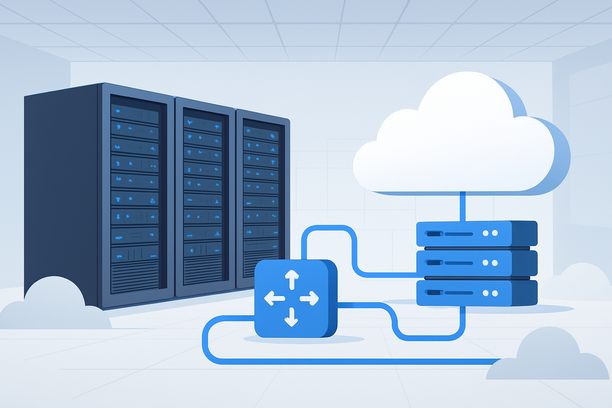
Orchestration Server: This is your application's brain. It receives user requests, formulates API calls, manages responses, and handles logic. A poorly located or underpowered server introduces latency, degrading the user experience and diminishing the value of your API spend.
Network Connectivity: The network path between your server and Google's API endpoints is critical. For users in mainland China, standard BGP routes often suffer from high latency and congestion. Optimized routes like CN2 GIA provide more direct connections, reducing round-trip times and protecting your investment in fast API responses.
Data Storage & Management: Applications using Retrieval-Augmented Generation (RAG), conversation history, or vector embeddings incur costs for persistent storage (databases, object storage) and the compute needed for indexing and querying.
Monitoring & Operations: Ensuring reliability requires load balancers, logging, alerting, and potentially auto-scaling systems, each contributing to your monthly operational cost.
How can you build a realistic budget for your Google Studio AI deployment?
Follow this structured approach to forecast your costs and avoid surprises:
Step 1: Profile Your Workload. Define your application's core functions (e.g., customer support chat, document summarizer). Each has a typical input/output token pattern.
Step 2: Project Volume. Estimate daily API calls. A chatbot with 1,000 daily conversations averaging 500 input and 300 output tokens consumes 800,000 tokens daily.
Step 3: Match Model to Task. Use Gemini 1.5 Pro only for tasks requiring complex reasoning. Use Flash or Pro for simpler, repetitive tasks to control costs.
Step 4: Factor in Long-Context Overhead. Model the extra cost when your application regularly processes large documents that cross long-context pricing thresholds.
Step 5: Add a Buffer. Include a 20-30% buffer in your estimate for error retries, edge cases, and traffic spikes.
| Application Type | Avg. Input Tokens | Avg. Output Tokens | Daily Calls | Est. Daily Tokens |
|---|---|---|---|---|
| Customer Service Chat | 500 | 300 | 1,000 | 800,000 |
| Document Summarizer | 4,000 | 600 | 200 | 920,000 |
| Code Assistant | 1,500 | 1,000 | 300 | 750,000 |
| Content Classifier | 200 | 50 | 5,000 | 1,250,000 |
When does self-hosted inference become more cost-effective than the API?
The decision hinges on workload predictability, sustained volume, and your team's technical capacity.
API Advantages: Zero upfront hardware investment, perfect elasticity, and no maintenance burden. You pay only for what you use and benefit from model updates automatically. This is ideal for variable workloads, early-stage products, and teams without dedicated infrastructure engineers.
Self-Hosted Advantages: Predictable monthly costs at high, stable volumes. Full control over data privacy. No dependency on external API availability. This requires capital expenditure on GPU hardware but becomes cheaper as your sustained usage increases.
The practical crossover point is when your monthly API bill consistently exceeds the total amortized monthly cost of a dedicated GPU server—including hardware, power, and maintenance. This calculation must also factor in engineering time for building and maintaining the inference stack.
For teams evaluating self-hosted options, providers like RakSmart offer dedicated server solutions with optimized network routes to specific regions, which can be a key variable in the total cost and performance equation.
Why is network quality a critical hidden cost for your AI application?
Network infrastructure is not a commodity. The route your API calls take determines latency, reliability, and user satisfaction.
For applications serving users in mainland China, this is especially acute. Standard BGP routes traverse multiple exchange points, resulting in high latency and jitter. This latency compounds with each API round-trip. A RAG pipeline requiring multiple sequential API calls multiplies this impact, making the network a dominant factor in effective cost and user experience.
Premium optimized network routes, like CN2 GIA, provide a more direct path with dedicated bandwidth. This reduces latency and improves connection consistency, ensuring your orchestration server's speed and the model's response quality aren't undermined by the network.
Total Cost of Ownership (TCO) Decision Checklist
Use this checklist to identify savings and risks in your current or planned Google Studio AI deployment:
- Model Allocation: Have you assigned each function to the most cost-effective model tier that meets its quality requirements?
- Prompt Efficiency: Are you trimming unnecessary context from prompts to stay below long-context pricing thresholds where possible?
- Server Sizing: Is your orchestration server sized for average load with headroom for peaks, avoiding over-provisioning?
- Network Route: Have you tested the latency and stability between your server and API endpoints for your primary user geography?
- Storage Tiering: Are you using the appropriate storage tier (e.g., SSD for active databases, object storage for archives) based on access patterns?
- Monitoring: Do you have cost and performance alerts to catch anomalies like error loops or traffic spikes early?
- Hybrid Viability: For steady-state workloads, have you modeled the TCO crossover point where a dedicated server becomes cheaper than API calls?
Frequently Asked Questions
Does Google Studio AI have a free tier or monthly minimum?
Google typically offers a free tier or initial credit for new users to experiment with the Gemini API. The specific limits and duration of this offer can change. Always check the current pricing page for the latest details on free tiers, usage limits, and billing thresholds.
How does request size affect my Google Studio AI bill?
Larger requests, especially those exceeding certain token limits, incur a higher per-token fee. This means a single request for a very large document can be more expensive than multiple smaller requests totaling the same token count. Efficient prompt design and chunking large documents can help manage this cost.
What are the main infrastructure considerations for deploying a Google Studio AI application from Asia?
For users in Asia, particularly mainland China, network latency to Google's API endpoints is a primary concern. Selecting a server with an optimized network route (like CN2 GIA) can significantly reduce round-trip time and improve application responsiveness, directly impacting user experience and the effective value of your API spend.
How do I decide between using the Gemini API and hosting a self-hosted model?
Use the API if your workloads are variable, you want zero maintenance, and you prioritize rapid development. Consider self-hosting if you have high, predictable volumes, require strict data control, or have the engineering team to manage GPU infrastructure. A hybrid approach is also common, using the API for elastic needs and a dedicated server for baseline processing.
Can I optimize costs without changing my application code?
Yes. Cost optimization can occur at the infrastructure level. Right-sizing your orchestration server, selecting a more efficient network route to reduce latency-induced retries, and implementing intelligent caching for frequent or repeated queries can all reduce your total cost without modifying your core application logic.
Conclusion and Next Steps
Understanding Google Studio AI pricing requires looking beyond the token bill to a holistic view of your infrastructure. The true cost is defined by your workload patterns, the efficiency of your orchestration layer, and—critically—the quality of the network connecting your users to the API. By applying a TCO framework and using the checklist above, you can build a reliable budget and make informed decisions between API consumption and self-hosted alternatives.
To implement the infrastructure recommendations outlined here, you can explore hosting solutions that provide the network optimization and server reliability needed for low-latency AI applications. Evaluating plans with optimized connectivity for your target user base is a practical next step toward controlling your full deployment cost.