
Overview
The performance of your Claude AI-powered application hinges on the efficiency of the server that bridges your users and Anthropic's API. This guide focuses on the operational setup of a production-ready API gateway, emphasizing network path selection and server configuration to ensure low latency, high reliability, and secure communication for real-time AI interactions.
What does a server actually do when you're using the Claude API?
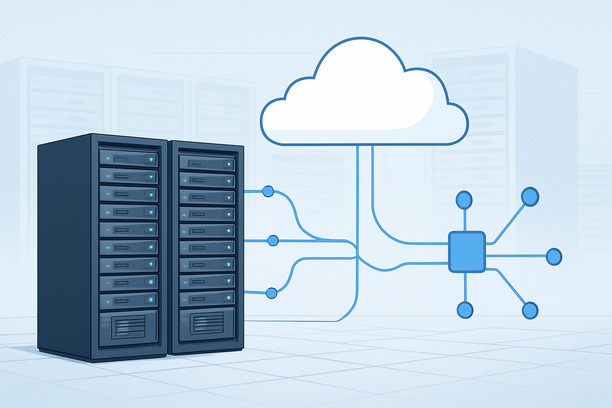
The server's primary role is not to run the AI model—that's handled by Anthropic's infrastructure—but to host the application logic, API gateway, caching, and middleware that interact with the API. Your server acts as a secure intermediary, processing incoming user requests, managing API keys, handling authentication, and routing prompts to Anthropic while managing the streaming response back to the client.
This middleware layer is critical for security, cost control, and performance optimization. It can implement rate limiting, request caching, and load balancing, and it shields your Anthropic API keys from direct client exposure. The server's own performance characteristics directly affect how quickly it can establish connections to Anthropic and deliver responses to end-users.
Why is the server's physical location a critical performance factor?
Server location determines the length and quality of two essential network paths: the outbound route to Anthropic's US-based API endpoints and the inbound route to your end-users. Minimizing latency on both paths is crucial for a responsive AI application.
Hosting your server in a North American data center, particularly on the US West or East Coast, creates a short, low-latency connection to Anthropic's infrastructure. This reduces the time-to-first-token for streaming responses and overall request duration. For example, a server in a Los Angeles data center will have a significantly shorter network hop to US API endpoints than one hosted in Frankfurt or Singapore.
The return path to your users is equally important. If your user base is primarily in Asia, you must consider a network that provides an optimized return path from your US server to that region. The ideal infrastructure minimizes latency and packet loss across both legs of the journey.
How do optimized network lines enhance AI API stability?
AI API applications are highly sensitive to network instability. A single delayed packet can stall a streaming response, and packet loss forces retransmissions, leading to perceived freezes or hangs. Standard international BGP routes often suffer from congestion and routing detours, especially during peak hours.
Optimized network lines, such as those using CN2 GIA (China Telecom Next Carrier Network – Global Internet Access) for traffic involving mainland China, provide a more direct, less congested path. This translates to lower latency, reduced packet loss, and greater stability. For AI workloads, this reliability is non-negotiable for maintaining consistent API call success rates and a smooth user experience.
For developers hosting a gateway server that both receives user requests and calls the Claude API, investing in network quality is more impactful than over-provisioning CPU or RAM.
What server configuration is needed for a Claude AI API gateway?
A server hosting an API gateway or middleware for Claude does not require a GPU, as it performs no model inference. The workload is primarily network I/O, JSON serialization, and lightweight application logic.
A practical starting point for a production gateway is a VPS with:
- CPU: 4 vCPUs (sufficient for concurrent TLS termination and request processing)
- RAM: 8-16 GB (to comfortably run a Redis cache, reverse proxy like Nginx, and your application runtime)
- Storage: 50-100 GB SSD (for logs, temporary data, and OS)
- Network: A 1 Gbps port with a premium network route to the US.
The most critical hardware selection is not the compute, but the underlying network connectivity of the hosting provider and its data center location.
Network-First Decision Framework for Claude AI API Hosting
Use this checklist to evaluate hosting providers based on network and operational priorities:
- API Endpoint Proximity: Does the provider offer data centers in North America (e.g., Los Angeles, Silicon Valley) for low-latency connection to Anthropic's US endpoints?
- User Base Routing: If your users are in Asia, does the network path from the server to that region use optimized lines (e.g., CN2 GIA, CMI N2) to minimize latency and packet loss?
- Bandwidth and Pricing: Is the port speed adequate (1 Gbps minimum), and is the pricing model flat-rate or unmetered? Unmetered bandwidth is preferable for high-volume API traffic.
- Network Stability: Does the provider guarantee network uptime and offer transparent performance metrics?
- IP Reputation: Does the server have a clean IP with a good routing history to major US network peers?
| Hosting Scenario | Primary Network Need | Recommended Infrastructure |
|---|---|---|
| Gateway for US-based Claude API, serving global users | Low-latency to US endpoints, stable global BGP routing. | VPS in a US data center (e.g., Los Angeles, Silicon Valley). |
| Gateway for Claude API, with majority of users in China | Optimized return path to China (CN2 GIA/CMI N2) and low latency to US endpoints. | VPS in a US data center with a premium China-optimized network line. |
| Global API gateway with multi-region user bases | Low latency to Claude API and optimized routing to multiple global regions. | VPS in a central US location with premium peering, or a multi-region deployment. |
For scenarios requiring optimized performance for users in China, evaluating a provider's specific network offering is essential. RakSmart's CN2 VPS products are designed to provide this optimized path, balancing access to US-based APIs with stable delivery to Chinese end-users.
Conclusion and Next Steps
Building a production Claude AI API hosting environment starts with choosing the right network foundation. While basic VPS resources are sufficient for the gateway layer, the provider's data center location, network routing, and connection quality to both Anthropic's endpoints and your end-users determine your application's real-world speed and reliability.
Evaluate hosting providers based on their network architecture first. If your application serves users in Asia and requires calls to US-based AI APIs, prioritize providers offering explicitly optimized network lines. Explore hosting plans that provide transparent performance metrics and routes tailored to your specific geography.
—
Frequently Asked Questions (FAQ)
Do I need a GPU server to host my Claude AI API application?
No. Since the Claude model runs on Anthropic's servers, your application server only needs to handle network traffic, JSON processing, and middleware logic. A standard VPS with adequate CPU, RAM, and a premium network connection is sufficient and more cost-effective.
How does the choice between CN2 and standard BGP affect my application?
For users in mainland China, CN2 (especially CN2 GIA) provides a lower-latency, more stable network path to your US-hosted server compared to standard BGP. This reduces API call timeouts, improves streaming response smoothness, and enhances overall application reliability.
What security considerations are important for my API gateway server?
You must secure the server itself (OS updates, firewall rules, SSH key authentication) and your application layer (input validation, API key management, rate limiting). Your gateway should also mask Anthropic API keys from direct client exposure and use TLS for all communications.
Can I use a cloud functions platform instead of a dedicated VPS for the gateway?
While serverless platforms can work for simple use cases, a dedicated VPS or VPC provides more control over networking, persistent connections for streaming responses, and consistent performance for long-running or high-throughput applications.
How do I monitor the performance of my Claude AI API gateway?
Focus on network-centric metrics: latency to Anthropic's endpoints (time-to-first-token), gateway response time, error rates (especially 5xx and timeout errors), and network packet loss. Traditional server metrics like CPU and RAM usage are secondary but should be monitored for capacity planning.