
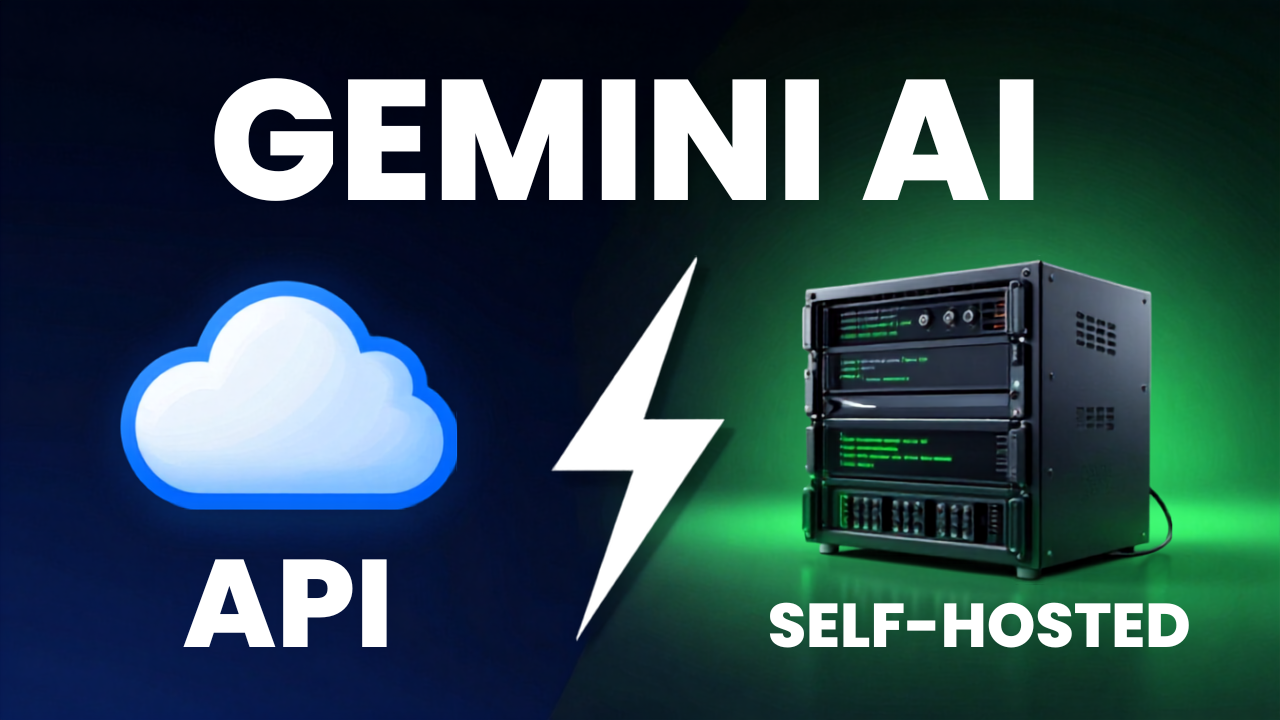
Overview
Gemini AI pricing for production use is not just the API bill; it is the combined cost of model access, application hosting, data storage, and operational overhead. Understanding this full cost picture is critical for accurate budgeting and building a system that scales without financial surprises.
If you are evaluating Gemini for a production application, a surface-level price comparison is insufficient. You need to map your workload—request volume, data processing, user location, and uptime requirements—to a realistic monthly expenditure that includes every layer of your stack. This guide provides a framework to calculate the true cost and choose the right infrastructure foundation.
What is the true cost of running Gemini AI in production?
The true cost of running Gemini AI in production is the sum of API expenses, application hosting, data transfer, storage, monitoring, and security controls. For most teams, the model fee becomes a predictable line item only after the surrounding infrastructure is properly designed and priced.
The key components are:
- Model & API Cost: The fee per token or request for accessing Gemini models.
- Compute Cost: The servers (cloud VMs, bare metal, or GPU instances) running your application, middleware, and orchestration logic.
- Storage & Data Cost: Databases for conversation logs, user data, and file storage (like documents or images for multimodal processing).
- Networking & Transfer Cost: Data egress fees, bandwidth for user traffic, and latency-optimized routes.
- Operational Cost: Logging, monitoring, security scanning, backup, and the engineering time to manage it all.
A production system’s infrastructure bill often exceeds its API bill, especially when user traffic is global or requires low latency.
How does the API pricing model affect your total bill?
Gemini’s API pricing is typically consumption-based, charging for input tokens, output tokens, and sometimes per request. Your total API cost depends on model choice, prompt engineering efficiency, and user interaction patterns.
| Gemini API Pricing Factor | Impact on Cost | Optimization Lever |
|---|---|---|
| Model Version | Pro and Ultra models are more expensive than Flash/Nano. | Use smaller, faster models for simple tasks. |
| Token Usage | Longer prompts and responses increase costs. | Implement prompt caching, concise output guidelines. |
| Request Volume | Cost scales linearly with requests unless you hit tiered pricing. | Batch requests where possible. |
| Rate Limits | Free or low-tier limits can force architectural changes. | Plan for upgrade paths as you scale. |
Careful prompt design and model selection are your first tools for cost control. However, this is only one part of the equation.
Why is application hosting a major cost variable?
Application hosting is a major cost variable because the compute and network resources required to serve users reliably and quickly often dwarf the direct API fees. Your architecture—whether serverless, containerized on VMs, or on bare metal—dictates your monthly spend and performance profile.
Compute architectures and their cost profiles:
- Serverless (e.g., Cloud Functions): Pay-per-execution can be cheap for sporadic traffic but becomes expensive and unpredictable at scale.
- Cloud VMs / Kubernetes: Predictable monthly cost for predictable traffic; scaling requires management and can lead to over-provisioning.
- Bare Metal / Dedicated Servers: High upfront cost but predictable fixed monthly price; best for consistent, high-throughput workloads and full control.
Network latency directly impacts perceived quality and cost. If your users are in North America, hosting in a US data center ensures lower latency. For a global user base, a network with good peering and low latency to major cloud API endpoints is critical. Inadequate hosting can lead to slow response times, forcing you to over-provision resources or lose users.
How do you calculate a realistic monthly production budget?
To calculate a realistic monthly budget, create a simple cost model that separates predictable fixed costs from variable usage costs.
Step 1: Estimate your variable API cost. Assume an average of 1,000 tokens per user interaction and 10 interactions per user per day. For 1,000 daily active users (DAUs), that’s 10,000 interactions/day = 300,000 interactions/month. At 1,000 tokens each, that’s 300M tokens/month. Check Gemini’s current per-token pricing for your chosen model to get a baseline estimate.
Step 2: Estimate your fixed infrastructure cost. This includes:
- Application server (VM or dedicated): $50 – $500+/month
- Managed database: $30 – $200+/month
- Object storage (for files, logs): $10 – $100+/month
- CDN and bandwidth: $20 – $150+/month
- Monitoring and security tools: $20 – $100+/month
Step 3: Add operational overhead. Budget 10-20% of the total for incidentals, unexpected traffic spikes, and DevOps time.
This model shows that for a moderately successful application, infrastructure costs can easily represent 50% or more of your total AI system cost.
What framework should you use to choose between hosting options?
Use a decision framework that weighs predictability, control, and scale against management overhead.
| Factor | Cloud VM / Managed Service | Bare Metal / Dedicated Server |
|---|---|---|
| Cost Predictability | Variable based on usage; can be optimized with reservations. | Fixed monthly cost; highly predictable. |
| Performance & Control | Shared virtualization; limited hardware tuning. | Full hardware access; maximum control over performance. |
| Scaling | Scale up/down easily; can be automated. | Scale by adding more servers; requires planning. |
| Best For | Variable workloads, rapid prototyping, teams without dedicated infra staff. | Consistent high-throughput workloads, cost-sensitive scaling, teams wanting full control. |
For AI applications requiring stable, high-performance backend services, dedicated servers provide a predictable cost foundation. For example, when you need a consistent environment for your API gateway, logging services, or a Redis cache, a provider like RakSmart offers dedicated server plans that can serve as a cost-effective, fixed-price anchor for your variable-cost API usage.
What should your cost optimization checklist include?
Use this checklist to audit your system and identify cost-saving opportunities.
- API Usage
- Have you profiled your prompts to minimize token waste?
- Are you using the most cost-effective model for each task type?
- Is prompt caching or result caching implemented for repeated queries?
- Compute & Hosting
- Is your server size right-sized for current average load, with a clear scaling plan?
- Are you using a fixed-cost dedicated server for components with predictable traffic?
- Have you evaluated serverless vs. long-running instances for your specific traffic pattern?
- Data & Storage
- Are you storing conversation logs and files in the most cost-effective tier (e.g., hot vs. cold storage)?
- Are you actively pruning unnecessary data to reduce storage and egress costs?
- Network
- Is your hosting location optimized for your primary user base to minimize latency?
- Are you using a CDN to cache static assets and reduce origin load?
- Operations
- Do you have monitoring and alerts for unexpected cost spikes?
- Are you reviewing and optimizing this cost model monthly?
FAQ
How does Gemini’s pricing compare to open-source models you can self-host?
Gemini’s pricing is a pay-per-use API model, while self-hosting open-source models like Llama involves fixed infrastructure costs (GPU servers) and operational overhead. For low to moderate usage, Gemini API is often cheaper and simpler. For very high, consistent usage where you can optimize GPU utilization, self-hosting may become more economical, but it requires significant technical expertise.
What is the biggest hidden cost when using Gemini for an application?
The biggest hidden cost is often the application hosting and data transfer required to serve users. A simple API call from a mobile app involves your backend server receiving the request, processing it, calling Gemini, and returning the result—each step incurring compute and potential bandwidth costs that can exceed the API fee itself.
Can I predict my monthly Gemini API bill accurately?
You can get a good estimate by tracking your average tokens per request and your request volume. However, costs are hard to predict precisely because user behavior, prompt complexity, and response lengths vary. Implementing usage dashboards and setting budget alerts is essential.
Does using a dedicated server help control Gemini-related costs?
Yes, a dedicated server provides a fixed, predictable monthly cost for your application’s compute layer. This stability is valuable when your Gemini API costs are variable based on usage. It removes one major variable from your overall budget.
How should a startup approach Gemini pricing for an MVP?
For an MVP, start with the Gemini API directly to minimize upfront infrastructure costs and time-to-market. Focus on building a functional product. As you validate demand and see usage patterns, you can then architect a more cost-optimized production system, potentially incorporating dedicated or optimized hosting.
Conclusion
Evaluating Gemini AI pricing for production requires looking beyond the token counter to the entire system. The most effective strategy balances API cost optimization with intelligent infrastructure choices. Start by mapping your projected workload to a total cost model, then select hosting that provides the right mix of predictability and performance for your stage.
As your application grows, revisiting this framework ensures your costs scale proportionally with your value. To build a stable, cost-predictable foundation for your AI backend, explore infrastructure options that align with your performance and budget requirements.