Overview
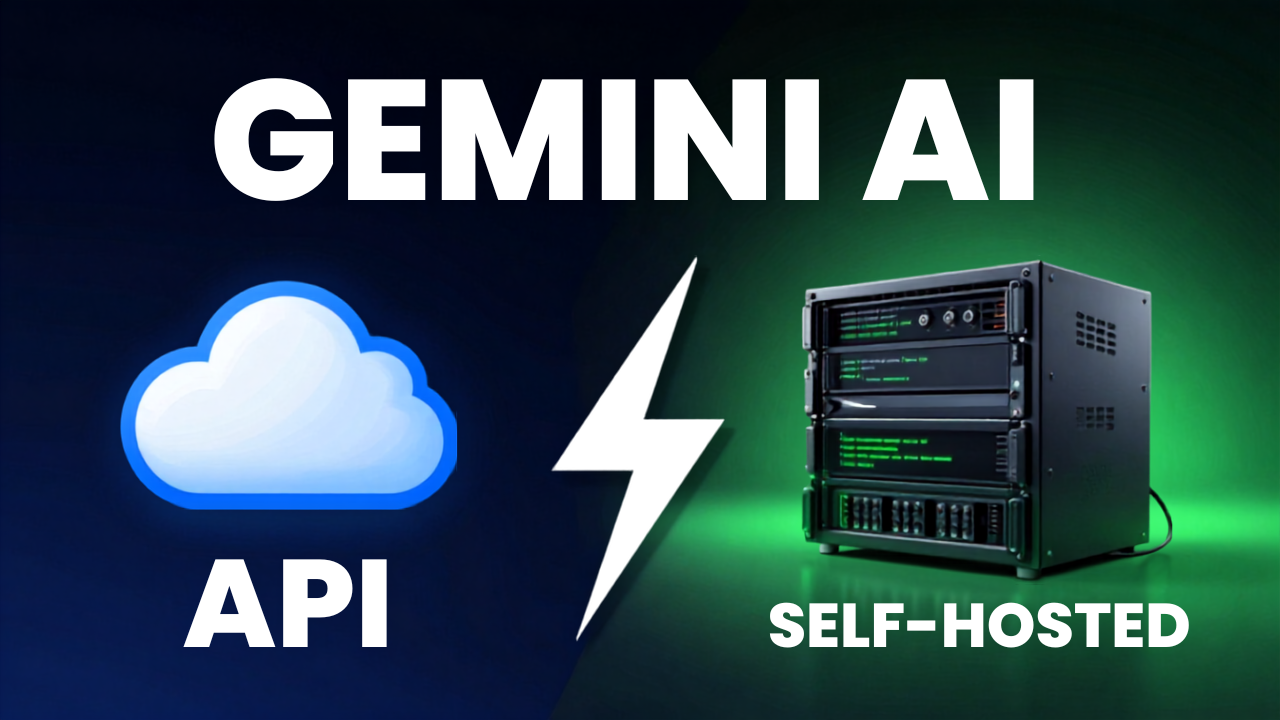
Google’s Gemini AI models present a powerful toolkit for developers, but the optimal infrastructure for deploying them varies dramatically based on your project’s requirements. The core decision lies between leveraging the managed Gemini API for simplicity or investing in self-hosted infrastructure, such as dedicated GPU servers, for maximum control and potentially lower costs at scale. This guide provides a clear framework to evaluate your options, comparing performance, cost, and operational trade-offs to match your specific workload.
What Are the Primary Deployment Models for Gemini AI?
The three main paths for working with Gemini AI are the Gemini API on Google Cloud, Google’s Vertex AI platform, and self-hosting open-source model variants or optimized inference engines on your own hardware. The API is a fully managed, pay-per-use service ideal for quick integration and variable workloads. Vertex AI offers more control within Google’s ecosystem, including tools for fine-tuning and MLOps. Self-hosting provides complete architectural freedom but requires you to manage the full stack, from hardware provisioning to software optimization. Your choice fundamentally impacts your project’s scalability, latency, cost predictability, and data sovereignty.
How Do You Choose Between Cloud and Bare Metal for Gemini Workloads?
The cloud versus bare metal decision hinges on your priorities: flexibility versus control and predictable performance. Cloud environments like Google Cloud or AWS offer unmatched flexibility; you can deploy a powerful GPU VM in minutes and scale resources elastically. This is perfect for experimentation, development, and workloads with unpredictable traffic patterns. However, at sustained high utilization, costs can escalate, and you may encounter performance variability due to shared resources.
Bare metal servers, whether provided by a specialized hosting company or located in your own data center, deliver dedicated, non-shared resources. For AI inference or training jobs that require consistent low latency, maximum GPU utilization, and direct high-speed interconnects, bare metal often provides superior price-performance. It also ensures absolute control over the hardware and network security posture, which is critical for proprietary models or regulated data. The trade-off is reduced flexibility and a greater operational burden for setup and management.
Which Infrastructure Profile Matches Your Specific Workload?
Different AI use cases demand distinct hardware and software configurations. Matching your workload to the right profile is the first step in optimizing for both performance and cost.
| Workload Type | Primary Need | Recommended Infrastructure | Key Consideration |
|---|---|---|---|
| Application Integration | Scalability, Ease of Use | Gemini API or Vertex AI (Cloud Functions, Cloud Run) | Managed scaling, no infrastructure overhead, clear token-based pricing. |
| Batch Processing | High Throughput, Cost Efficiency | Spot VMs or Bare Metal GPU Servers | Tolerant of interruptions; raw compute per dollar is paramount. |
| Real-Time Inference | Low Latency, Consistent Performance | Dedicated GPU Servers (Colocated or Bare Metal) | Predictable network and hardware performance; no noisy neighbors. |
| Fine-Tuning & Training | High VRAM, Large Storage I/O | High-End GPU Servers (e.g., NVIDIA H100, A100) | Direct data access, full environment control, high memory bandwidth. |
| Sensitive Data Processing | Data Sovereignty, Security | Private Cloud or Dedicated Bare Metal | Physical and network isolation to meet compliance mandates. |
What Are the Hidden Cost Factors in Gemini AI Infrastructure?
Beyond the obvious hourly rate for cloud instances or monthly fee for bare metal, several hidden cost factors can significantly impact your total expenditure. Understanding these is crucial for accurate budgeting and comparison.
1. Compute Utilization Cost: Cloud pricing rewards elasticity but penalizes constant use. If your AI workload runs 24/7 with high GPU utilization, an on-demand cloud instance will likely cost more than a dedicated bare metal server. Model your expected hours of operation and average utilization percentage.
2. Data Egress and Ingress Fees: Moving large datasets or model weights in and out of a cloud provider incurs significant egress charges. For data-intensive applications, this can become a major line item. Bare metal environments often include generous or unlimited bandwidth within the colocation facility, eliminating this surprise.
3. Software and License Costs: Some AI frameworks, optimization tools, or monitoring platforms may require paid licenses. When self-hosting, these costs fall directly on you. Cloud platforms may bundle some software licenses or offer them through marketplaces, adding to the base price.
4. Operational Overhead (Team Time): Managing bare metal servers requires dedicated DevOps or systems administration expertise. The salaries and time of your technical team are a real cost. Cloud services offload much of this management, effectively letting you “rent” operational expertise as part of the service fee.
A Decision Framework: 5 Critical Questions Before Deploying Gemini AI
Use this practical checklist to systematically evaluate your infrastructure needs. Answering these questions will point you toward the most appropriate deployment model.
- Is rapid development and iteration more important than long-term cost optimization? If yes, start with the managed Gemini API to minimize upfront infrastructure decisions and accelerate your time-to-market.
- Do you need to fine-tune the model on large, proprietary datasets that cannot leave your environment? If yes, a dedicated bare metal server with high-speed local storage and ample GPU VRAM is essential for both performance and data security.
- Is predictable, sub-100ms latency for end-users a non-negotiable requirement? If yes, avoid shared cloud resources and deploy dedicated GPU servers in a data center geographically close to your user base to minimize network hops.
- What is your team’s primary expertise: application development or infrastructure management? If your team is stronger in application code, lean toward managed services. If you have strong DevOps skills, self-hosting offers more levers to pull for optimization.
- What is your projected scale in 12 months? Project your workload volume and model complexity. For sustained, high-throughput workloads, a reserved cloud instance or an outright bare metal purchase will almost always be cheaper than on-demand pricing.
Getting Started: A Hybrid Approach
A pragmatic strategy is to begin with the managed API for core application logic and user-facing features. This allows you to validate your product without major infrastructure commitments. Simultaneously, you can benchmark self-hosted inference on a dedicated server for specific, high-value tasks like processing large media files or running batch analyses where you can control the hardware to optimize cost-per-operation. This hybrid model gives you the best of both worlds: cloud scalability for your main application and bare-metal efficiency for specialized workloads.
For those exploring the self-hosted path, selecting a hosting partner with configurable bare metal servers featuring the latest NVIDIA GPUs is critical. Providers like RAKsmart offer dedicated server plans that can be tailored to match the specific VRAM and compute requirements of Gemini model variants, ensuring you deploy the right hardware for optimal performance without over-provisioning.
Conclusion
Selecting infrastructure for Gemini AI is not a one-size-fits-all decision. It requires a careful evaluation of your model’s computational demands, your application’s performance and security needs, and your team’s operational capacity. By weighing the trade-offs between the convenience of the managed API, the flexibility of the cloud, and the dedicated control of bare metal, you can architect a foundation that supports your project’s growth efficiently. Start with a clear assessment using the framework above, and choose the path that aligns best with your technical and financial goals.
To explore high-performance infrastructure options for your AI projects, including configurable GPU servers suitable for hosting and running Gemini-based models, consider RAKsmart’s dedicated server solutions as you evaluate providers.
—
Frequently Asked Questions (FAQ)
Can I run open-source variants of Gemini models on my own server?
Yes, you can deploy compatible open-source models or inference engines (like those built for Transformer-based architectures) on your own hardware. This requires servers with sufficient VRAM, typically from the NVIDIA A100 or H100 series, and a properly configured CUDA and deep learning software stack. The main advantage is full control over data and performance tuning.
How does the cost of the Gemini API compare to self-hosting at scale?
At low to moderate scale, the API is often cheaper due to its pay-per-use model. However, as your request volume and model size increase, the cost of API calls can surpass the fixed cost of dedicated hardware. A break-even analysis based on your projected tokens-per-month is essential before committing to either path for a large-scale project.
What hardware specifications are most critical for self-hosting Gemini inference?
The most critical factors are GPU VRAM capacity (to load the entire model in memory) and GPU compute performance (for inference speed). High-speed local storage (NVMe SSDs) for model loading and large memory bandwidth are also important. Network latency between servers matters less for single-model inference but becomes crucial for distributed or multi-node setups.
Is it possible to migrate from the Gemini API to self-hosted infrastructure later?
Yes, but it requires significant development effort. You would need to replace API calls with a custom inference client, deploy and manage the model server yourself, and handle all scaling and monitoring. It’s often easier to design with this migration path in mind from the start, perhaps by using abstraction layers in your application code.
How do I ensure low latency for a real-time AI application?
Low latency requires a combination of factors: deploying your inference servers in a data center geographically close to your end-users, using dedicated (non-shared) GPU resources to eliminate contention, and optimizing the model itself for inference speed through techniques like quantization. A bare metal deployment in a performance-tier data center is often the most reliable way to achieve consistently low latency.