Overview
Google Studio AI pricing operates on a straightforward pay-per-use model where costs are calculated based on the number of tokens processed by various Gemini models. However, the true cost of deploying a production-grade AI application using this service extends significantly beyond the API bill. The total cost of ownership (TCO) encompasses backend orchestration infrastructure, network performance, and scalability, making it a complex equation where the cheapest per-token rate does not always yield the lowest total spend.
What Exactly Are Google Studio AI Tokens and How Are They Priced?
Google Studio AI charges are based on "tokens," which are chunks of text used for processing. Each Gemini model has a specific price per million tokens for both input (your prompts) and output (the model's responses).
The pricing is highly variable across different model versions. For instance, the flagship Gemini 1.5 Pro model has a higher cost per token compared to the lighter Gemini 1.5 Flash or the older Gemini 1.0 Pro. Furthermore, the cost for long-context queries (when you exceed a certain token threshold in a single request) is higher than for short-context queries. This tiered pricing means your actual bill depends heavily on the model you choose and the complexity of your interactions.
How Do Model Choices Impact Your Bill Drastically?
The choice of model is the single largest lever on your pricing because different models have different computational costs. Gemini 1.5 Pro is designed for complex reasoning, code generation, and analyzing long documents, requiring more powerful and expensive hardware to run, reflected in its higher token price. Conversely, Gemini 1.5 Flash is optimized for high-speed, high-volume tasks with lower accuracy, running on less resource-intensive infrastructure, thus costing less per token.
Selecting the most powerful model for a simple classification task is like using a supercomputer to do basic arithmetic—it works, but you overpay. Your workload dictates the model; a customer service chatbot might perform well on Flash, while a legal document analysis tool may require Pro's capabilities.
To put this into perspective, here is a comparative breakdown of token pricing tiers (based on publicly available rates at the time of writing):
| Model Tier | Primary Use Case | Input Price (per 1M tokens) | Output Price (per 1M tokens) |
|---|---|---|---|
| Gemini 1.5 Flash | High-volume, low-latency tasks | Lower | Lower |
| Gemini 1.0 Pro | Balanced performance and cost | Moderate | Moderate |
| Gemini 1.5 Pro | Complex reasoning, long-context analysis | Higher | Higher |
Why Do Hidden Infrastructure Costs Inflate Your Total Spend?
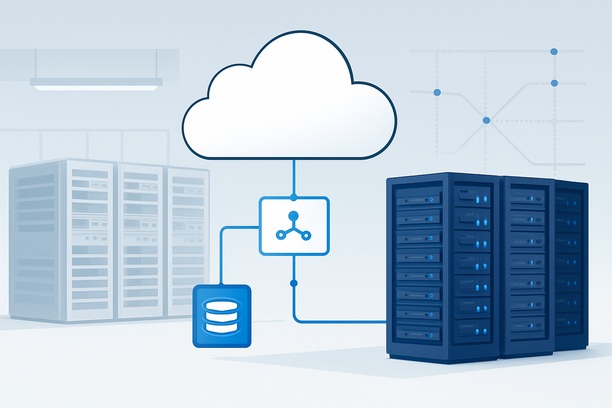
The token price from Google is only part of the equation. The real "infrastructure cost" includes the systems you build and maintain to use the AI API effectively. This includes:
- API Orchestration Servers: You need a reliable server to call the Google API, handle user requests, manage authentication, and process responses. Downtime or latency here directly impacts your user experience.
- Network Latency and Bandwidth: Each API call requires a stable, low-latency network connection. If your backend server is poorly connected to Google's endpoints, response times will suffer, increasing the perceived latency for your end-users.
- Data Storage and Retrieval: Many advanced AI applications (like RAG systems) require a vector database or other storage to provide context to the model. This adds another layer of infrastructure cost.
- Scaling and Redundancy: As your user base grows, you need to ensure your backend can scale to handle increased API call volumes without failing, often involving load balancers and multiple server instances.
These components form the hidden scaffolding around the pure AI API cost and are critical for a production-grade deployment.
What is the Framework for Calculating Your True AI Project Cost?
To avoid budget surprises, use this decision checklist to frame your cost analysis:
- Workload Analysis: What is the primary function of your AI feature? (e.g., summarization, generation, classification). This determines the minimum model capability required.
- Volume Estimation: What is the expected number of API calls per day/month, and what is the average token count per call? This defines your scale.
- Latency Requirements: Do your end-users need real-time responses (e.g., interactive chat), or are batch processes acceptable? This influences both model choice and backend server location.
- Geographic User Base: Where are your users located? If they are concentrated in a region like mainland China, the quality and latency of the network path from your backend servers to Google's API endpoints become a major cost and performance factor.
- Backend Infrastructure Selection: Will you host your orchestration logic on a scalable cloud instance, a dedicated server, or a VPS? The answer must balance cost, control, and network performance for your user base.
Why is Network Quality the Critical Variable for AI Application Performance?
For AI applications serving global users, especially those with a significant audience in China, network infrastructure is not a generic commodity—it's a performance-determining component. A slow or unstable connection to the AI API can negate the benefits of a fast model.
This is where specialized network routes become crucial. For users in China accessing services hosted abroad, a premium optimized network like CN2 GIA (China Next Generation Carrying Network Global Internet Access) can provide significantly lower latency and higher stability compared to standard international BGP routes. The difference can mean API responses in 150ms versus 300ms+ during peak hours, directly impacting user retention. When your backend server's location and network quality are misaligned with your user geography, you effectively pay for performance you're not delivering.
How Does Infrastructure Hosting Complement Your AI Cost Strategy?
For projects where the backend server handling AI API orchestration needs to be located outside of China but must be accessed reliably by Chinese users, the infrastructure hosting choice becomes part of your cost-performance equation. A provider like RakSmart offers VPS and dedicated server solutions with enterprise CN2 GIA network optimization, designed to provide stable, low-latency connectivity for this exact scenario.
Choosing such an infrastructure ensures that the "hidden" network cost component of your AI application is optimized for performance, preventing network jitter from becoming a bottleneck that frustrates users and wastes the money spent on premium AI model tokens.
FAQ
Can I negotiate Google Studio AI pricing for high-volume usage?
Yes, Google offers pay-as-you-go pricing for general use and provides "editions" like the "Pro Edition" for enterprise needs. For consistently high volume, you should contact Google Cloud sales to discuss custom pricing agreements that may offer better rates than the standard public pricing.
How can I reduce my Google Studio AI token costs without degrading quality?
Optimize your prompts to be concise and clear to reduce input token count. Use the most cost-effective model that meets your quality requirements (e.g., use Flash for non-critical tasks). Implement prompt caching where possible to avoid reprocessing the same context repeatedly.
Does the location of my backend server affect the price Google charges?
No, Google's token pricing is global and does not vary based on your server's location. However, your server's location significantly affects the latency and reliability of your API calls, which is a crucial part of the overall infrastructure cost and user experience.
What is the main difference in cost structure between Google Studio AI and self-hosted open-source models?
Google Studio AI uses a pay-per-use token model, avoiding upfront capital expenditure. Self-hosting open-source models requires significant upfront investment in GPU hardware and incurs ongoing operational costs (power, cooling, maintenance) but can be cheaper at very high, predictable usage volumes. The break-even point depends on your scale.
How should I factor infrastructure reliability into my total cost of ownership?
Reliability should be viewed as a cost multiplier. Cheaper, unreliable infrastructure leading to downtime or poor performance can result in lost revenue, wasted API tokens from failed calls, and reputational damage. Your infrastructure cost should include the premium paid for high availability (SLAs), redundant networks, and quality hardware to protect the value of your AI application.
Conclusion
Understanding Google Studio AI pricing requires looking beyond the per-token rates to the full infrastructure stack. Your total cost is a combination of model selection, usage volume, and the performance of the backend systems that connect your users to the AI. By evaluating your specific workload, user geography, and performance needs, you can build a cost-efficient system that delivers value without overspending on either AI tokens or unreliable infrastructure. For projects needing optimized network performance for Chinese users, exploring specialized hosting solutions with network optimization can be a strategic part of this evaluation.