Overview
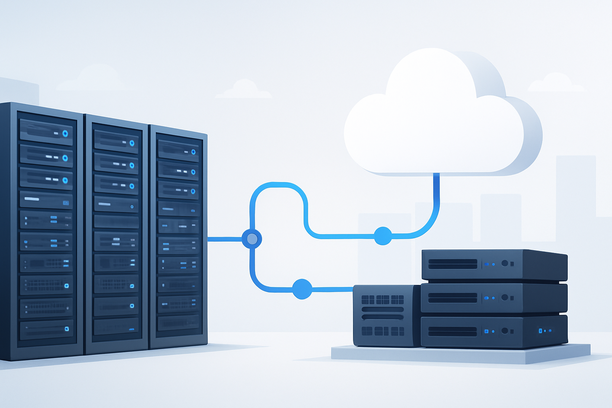
Moving from a public AI API to a private cloud deployment shifts control over your data, performance, and cost structure to your own infrastructure. While specific managed services like Google Studio AI are designed for public consumption, the underlying need for sovereign AI inference is often met by deploying open-source models or custom AI stacks on dedicated hardware. This guide focuses on the critical framework for securely deploying any AI model in a private cloud, from selecting the right GPU foundation to implementing strict network security.
Why Choose a Private Cloud for AI Deployment?
A private deployment is chosen when data sovereignty, cost predictability, or environmental control outweigh the convenience of a managed public service. It transforms your AI capability from a rented service into a controlled asset.
Data Sovereignty and Control
Your data never leaves your physical or virtual private infrastructure. This is non-negotiable for industries handling sensitive training data, proprietary information, or operating under strict data residency regulations. The entire inference process, including prompts and outputs, remains within your secure boundary.
Predictable Performance and Cost
Dedicated hardware eliminates the "noisy neighbor" effect and unpredictable usage-based billing. For consistent, high-volume workloads, a fixed monthly cost for a powerful server often becomes more economical than sustained API fees over a 12-24 month period.
Customization and Integration
A private environment allows for deep integration with internal systems, custom authentication, and the ability to optimize the entire software stack—from OS kernel parameters to AI framework settings—for maximum throughput.
Hardware Selection: The GPU Foundation
The performance of your private AI deployment is fundamentally tied to the server's GPU. While requirements vary by model, a powerful NVIDIA GPU with sufficient VRAM is essential for acceptable inference speed.
| Component | Role in AI Deployment | General Recommendation |
|---|---|---|
| GPU | Primary engine for model inference. More VRAM and faster CUDA cores directly translate to higher throughput and the ability to run larger models. | NVIDIA A100 (40GB/80GB) or H100 for serious workloads. NVIDIA T4 (16GB) is a minimum entry point. |
| System RAM | Handles pre/post-processing, data loading, and OS tasks. Insufficient RAM creates a bottleneck before data even reaches the GPU. | ≥ 2x the GPU's VRAM. 64GB – 128GB DDR4/DDR5 is a common range. |
| Storage | Stores model weights, datasets, logs, and temporary processing data. Speed directly impacts model loading and data pipeline latency. | 1TB+ NVMe SSD for fast read/write speeds. |
| CPU | Manages the server OS, network stack, and non-GPU computational tasks. | Modern 8+ core processor (e.g., AMD EPYC, Intel Xeon). |
For workloads demanding this level of performance and isolation, a bare metal server is the ideal platform. Providers like RakSmart offer Bare Metal Cloud and Multi-IP Bare Metal Cloud solutions, providing the raw, dedicated resources necessary for sensitive AI workloads.
Network Architecture and Security: A Critical Layer
A private server hosting a valuable AI model is a high-priority target. A misconfigured port can instantly expose your model and its data. A layered security strategy is mandatory.
Security Groups as Your Digital Gatekeeper
The first line of defense is a security group or firewall that defaults to a "deny all" inbound policy. You then add specific, minimal rules to allow necessary traffic. For a typical AI inference server, this means:
- SSH Management Access: Port 22, restricted strictly to your team's static IP addresses.
- API Service Port: The port your AI model listens on (e.g., 443, 8080), exposed only if required for external access.
- Monitoring Ports: For tools like Prometheus or Grafana, if deployed.
Configuring these rules requires defining Priority, Protocol, Direction, and IP Range. Rules with a lower priority number take precedence. For a detailed walkthrough on adding rules, refer to the Cloud Native Security Group Settings.
Access Control Best Practices
- IP Whitelisting: Never expose management interfaces to the public internet.
- VPN First: Use a VPN like WireGuard for all administrative access, then connect to the internal AI service endpoint.
- Role-Based Access: Use non-root accounts, key-based SSH authentication, and disable password logins.
Deployment Checklist: A Step-by-Step Framework
Follow this structured process to ensure a secure and functional deployment.
Infrastructure & System Preparation
- Provision a server with a compatible NVIDIA GPU and sufficient RAM/storage.
- Install a clean, supported Linux distribution (e.g., Ubuntu 22.04 LTS).
- Update all system packages.
- Install the NVIDIA driver, CUDA Toolkit, and cuDNN library. Verify with
nvidia-smi.
Network Security Hardening
- Apply a restrictive security group with a "deny all inbound" default.
- Add specific rules for SSH (from your IP only) and the AI service port.
- Set up a VPN for administrative access.
Software & Model Deployment
- Install required runtimes (Python, Docker, Kubernetes if needed).
- Download your AI model weights and components.
- Configure the service to listen on
127.0.0.1(localhost) unless external access is needed. - Test inference locally via a script or
curl.
Operational Readiness
- Set up logging and forward to a central system.
- Configure GPU and system health monitoring.
- Implement an automated backup strategy for models and configuration.
Operational Considerations and Maintenance
A private deployment transfers operational responsibility to your team.
- Updates & Patches: You must apply OS, driver, and AI framework security patches.
- Monitoring: Continuously monitor GPU temperature, VRAM usage, and system health to prevent downtime.
- Scaling: Vertical scaling (upgrading hardware) is straightforward. Horizontal scaling requires implementing load balancing and is more complex.
Decision Framework: When to Choose Private vs. Public
Use this framework to determine the right deployment model for your workload.
- Data Sensitivity is HIGH (e.g., medical, financial, IP): Prioritize private deployment. Public APIs are a non-starter.
- Cost Predictability is Critical (consistent high-volume): Private deployment often wins after 12-18 months.
- Workload is Sporadic/Low-Volume: Public API remains simpler and cheaper.
- Need for Elastic Scaling (spiky demand): Hybrid approach—run a baseline on private infrastructure, burst to public cloud.
FAQ
Can I deploy a model like Google Studio AI privately on my own server?
Specific proprietary models from Google may not be designed for self-hosting. The private deployment model discussed here is generally applied to open-source models (e.g., from Hugging Face) or custom-trained models where you have full control over the weights and inference stack.
What are the minimum network bandwidth requirements?
For internal team access, a 1Gbps connection is often sufficient. For a public-facing endpoint serving high traffic, a 10Gbps or dedicated line may be necessary to prevent network bottlenecking.
How do I handle SSL/TLS for my private AI API endpoint?
For an endpoint on a private network, you can use a certificate from your own private Certificate Authority (CA). For a public endpoint, use a free certificate from Let's Encrypt. The goal is to encrypt data in transit.
What is the primary security risk in a private AI deployment?
The most common vulnerability is an improperly configured network security group, accidentally exposing the SSH port or API endpoint to the public internet. Strict adherence to the "deny all, then allow specific" rule pattern is critical.
How does ongoing cost compare to using a public API?
For low usage, public APIs are cheaper. For high, consistent usage (thousands of requests per hour), the fixed monthly cost of a dedicated GPU server becomes significantly more cost-effective. Conduct a break-even analysis based on your projected token/request volume.
Conclusion and Next Steps
Deploying an AI model in a private cloud transforms it from a consumable service into a sovereign, controlled asset. Success hinges on a secure foundation: starting with rigorously configured network security groups, selecting powerful and isolated bare metal hardware, and maintaining disciplined operations. While the process requires more upfront effort than using a public API, it delivers unmatched control over data, performance, and long-term cost.
If you are ready to build a secure and high-performance environment for your AI workloads, exploring robust infrastructure options like a dedicated bare metal cloud can provide the solid foundation your deployment requires.