Overview
Google Studio AI pricing is primarily a token-based cost for accessing Gemini model inference via API. However, the true monthly expense for a functional AI application extends far beyond this per-token fee. To accurately budget and optimize, you must account for the entire operational stack: the orchestration layer that calls the API, the network path that carries data, the storage for context and history, and the monitoring systems that ensure reliability. This article deconstructs these cost layers, provides a practical framework for calculating total cost of ownership (TCO), and helps you decide when to lean on the API versus when investing in your own infrastructure makes financial sense.
What Exactly Are You Paying For in the Google Studio AI Token Cost?
Your Google Studio AI bill is calculated based on the number of tokens processed by Gemini models, with separate rates for input and output tokens. The cost per token varies significantly across model tiers, reflecting their underlying computational complexity and capabilities.
The flagship Gemini 1.5 Pro model, designed for complex reasoning, code generation, and analysis of long documents, commands the highest per-token rate. This premium reflects the substantial compute resources required for its advanced functions. In contrast, Gemini 1.5 Flash, optimized for speed and high-throughput tasks, runs on leaner infrastructure and is more cost-effective. Gemini 1.0 Pro offers a balanced middle ground.
A critical detail is the long-context pricing tier. When your request exceeds a certain token threshold, the per-token rate increases. This means processing a single, very large document can be significantly more expensive than multiple smaller requests that total the same token count. Your model selection, token volume, and request size are the primary levers you can pull to control this direct cost.
| Gemini Model Tier | Primary Use Case | Relative Input Cost | Relative Output Cost |
|---|---|---|---|
| Gemini 1.5 Flash | High-speed, high-volume tasks | Low | Low |
| Gemini 1.0 Pro | General-purpose, balanced tasks | Medium | Medium |
| Gemini 1.5 Pro | Complex reasoning, long-context analysis | High | High |
Direct answer: Your token cost is determined by which model you select, the volume of tokens you process, and whether your requests consistently cross into the more expensive long-context tier.
What Hidden Infrastructure Costs Does Google Not Bill You For?
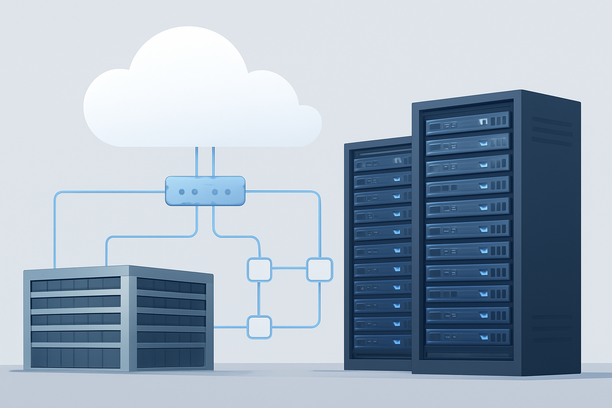
The API token price covers model inference, but your application requires surrounding infrastructure to function. These components are invisible in your Google billing dashboard but represent real, recurring monthly expenses.
API Orchestration Server: This is the server that receives user requests, constructs the properly formatted API calls to Google Studio AI, manages authentication keys, parses the model's response, and delivers the final output to the user. This server needs reliable compute power, memory, and a stable network connection. An underpowered or poorly located orchestration server introduces latency that makes your entire application feel slow, regardless of how fast the Gemini model itself responds.
Network Connectivity: The path between your orchestration server and Google's API endpoints is a critical performance and cost factor. Poor network routing adds latency to every single API call. For applications serving users in mainland China, this is particularly important. Standard international BGP routes from China to Google's infrastructure often suffer from high latency and congestion during peak hours. Optimized network paths, such as those using CN2 GIA, provide a more direct and stable connection, reducing round-trip times and protecting the value of your API spend.
Data Storage and Retrieval Systems: If your application uses retrieval-augmented generation (RAG), maintains user session history, or stores vector embeddings for a knowledge base, you incur costs for persistent storage and the compute resources needed for indexing and querying that data.
Monitoring, Logging, and Scaling Infrastructure: To maintain application health and performance as you scale, you need load balancers, log aggregation tools, alerting systems, and auto-scaling groups. Each of these services carries costs that scale with your traffic and operational complexity.
How Should You Build a Token Budget to Forecast Your API Spend?
Before committing to infrastructure, estimate your token consumption to avoid budget surprises. Use this structured approach:
Step 1: Profile Your Workload. Identify your application's core functions—a customer service chatbot, a document summarizer, a code assistant. Each has a typical pattern of input (your prompts) and output (the model's response).
Step 2: Project Daily Volume. Estimate the number of API calls per day. For example, a chatbot handling 1,000 daily conversations, each averaging 500 input tokens and 300 output tokens, consumes 800,000 tokens daily.
Step 3: Match Model to Task Complexity. Don't use the premium Gemini 1.5 Pro for simple classification tasks. Reserve higher-tier models for functions that genuinely require advanced reasoning, and use Flash or Pro for more straightforward operations.
Step 4: Factor in Long-Context Overhead. If your application processes large documents or maintains extensive conversation histories, model the additional cost when requests cross the long-context pricing threshold.
Step 5: Add a Buffer. Always add a 20-30% buffer to your estimate. Production workloads rarely match projections exactly; unexpected traffic spikes, error retries, and edge cases all consume extra tokens.
| Workload Example | Avg. Input Tokens | Avg. Output Tokens | Daily Calls | Estimated Daily Tokens |
|---|---|---|---|---|
| Customer Service Chat | 500 | 300 | 1,000 | 800,000 |
| Document Summarization | 4,000 | 600 | 200 | 920,000 |
| Code Review Assistant | 1,500 | 1,000 | 300 | 750,000 |
| Content Classification | 200 | 50 | 5,000 | 1,250,000 |
When Does Self-Hosted Inference Become More Cost-Effective Than API Calls?
The decision between using the Google Studio AI API and running your own inference server hinges on three factors: volume predictability, scale, and your team's technical capacity.
API Usage Advantages: Zero upfront hardware investment, perfect elasticity, and no maintenance burden. You pay only for what you use and automatically benefit from the latest model versions. This is ideal for variable workloads, early-stage products, and teams without dedicated infrastructure engineers.
Self-Hosted Advantages: Predictable monthly costs at high and stable volumes, full control over data privacy and security, no dependency on external API availability, and the potential for model fine-tuning. This requires capital expenditure on GPU hardware but becomes cheaper as your sustained usage increases.
The practical decision point: if your monthly API bill consistently exceeds the total amortized monthly cost of a dedicated GPU server—including hardware, power, cooling, and maintenance—self-hosted infrastructure deserves serious evaluation. This calculation must also factor in the engineering time required to build and maintain the inference stack, as well as the risk of hardware obsolescence.
Many teams find a hybrid approach optimal. They use the API for elastic, unpredictable workloads while maintaining a baseline of self-hosted infrastructure for steady-state, high-volume processing. For teams evaluating self-hosted options, providers like RakSmart offer VPS and dedicated server solutions that can be optimized for specific network routes, such as CN2 GIA, to ensure low-latency access for target user bases.
Why Is Network Quality a Critical Component of Your Real AI Cost?
Network infrastructure is not a commodity when it comes to AI application performance. The route your API calls take between your orchestration server and Google's endpoints directly determines latency, reliability, and user satisfaction.
For applications serving users in mainland China, this network challenge is particularly acute. Standard international BGP routes from China to Google's infrastructure typically traverse multiple exchange points, resulting in high latency and jitter during peak hours. This latency compounds with each API round-trip. An application requiring multiple sequential API calls, such as a RAG pipeline, multiplies this impact, making the network a dominant cost factor in user experience.
Premium optimized network routes, like CN2 GIA (China Next Generation Carrying Network Global Internet Access), provide a more direct path with dedicated bandwidth. This can reduce latency and dramatically improve connection consistency during peak traffic, ensuring that the speed and money invested in fast AI model tokens aren't wasted on a slow delivery network.
Direct answer: Network quality is a cost multiplier. A server on a poor network route erodes the value of your AI API spend by adding avoidable latency to every response.
How Do You Choose the Right Backend Infrastructure for Your AI Project?
Selecting the right backend server depends on your workload, user geography, and budget. The key is to match the infrastructure to the task.
For projects where the backend server needs to deliver reliable, low-latency connectivity to users in China while calling international AI APIs, infrastructure providers offering optimized network routes become a strategic choice. A well-chosen VPS or dedicated server acts as a stable bridge, ensuring that your application logic runs efficiently and that API calls to services like Google Studio AI are routed optimally.
| Task Type | Recommended Infrastructure Focus | Why It Matters |
|---|---|---|
| API Orchestration & RAG Logic | Reliable CPU, ample RAM, optimized network | Manages application flow and data retrieval without bottlenecking the AI model. |
| User-Facing Application Server | Low-latency network to end-users, SSD storage | Delivers the final response quickly; storage speed affects dynamic content generation. |
| Local Model Inference | High-end GPU, fast VRAM, high-bandwidth internal network | The GPU is the primary cost driver; network focuses on data loading and user response. |
| Vector Database & Session Storage | Fast SSD/NVMe storage, sufficient RAM | I/O speed directly impacts retrieval time for RAG systems. |
A Decision Framework: API, Self-Hosted, or Hybrid?
Use this checklist to evaluate which model aligns with your project's constraints and goals.
Prioritize the API-First Model if:
- Your workload is variable or unpredictable.
- You are in an early development or proof-of-concept phase.
- Your team lacks dedicated infrastructure or ML operations expertise.
- You require access to the latest model iterations with minimal migration effort.
- Data privacy requirements are not extremely stringent.
Evaluate Self-Hosted Inference if:
- Your token volume is high, predictable, and sustained.
- You have strict data sovereignty or privacy requirements.
- You have the engineering resources to build and maintain an inference stack.
- You plan to fine-tune models for specialized tasks.
- You need to eliminate dependency on external API availability.
Consider a Hybrid Approach if:
- You have a stable baseline workload combined with unpredictable spikes.
- You want to balance cost control for steady-state processing with flexibility for growth.
- You are migrating from an API-only setup and need a phased transition.
- You need to keep sensitive data processing on-premise while leveraging the API for less sensitive tasks.
FAQ
How is Google Studio AI pricing different from standard cloud GPU costs?
Google Studio AI pricing is a per-token fee for model inference via API, covering the compute for that specific call. Standard cloud GPU costs are for leasing raw hardware (by the hour or month), and you must manage the entire inference stack yourself, including model deployment, scaling, and maintenance.
Can I reduce my Google Studio AI bill by optimizing my prompts?
Yes. Shorter, more efficient prompts with clear instructions reduce input token counts. Structuring your application to minimize unnecessary back-and-forth API calls can also significantly lower total token consumption. Choosing the appropriate model tier for each task is another effective optimization.
When should I move from Google Studio AI API to a dedicated GPU server?
The common threshold is when your monthly API bill consistently exceeds the total monthly cost of a dedicated GPU server. This includes hardware amortization, power, cooling, network, and maintenance. If your usage is predictable and high-volume, self-hosting often becomes more economical.
Does server location affect my Google Studio AI costs?
Server location does not change Google's per-token price, but it drastically affects the total operational cost and performance. A poorly located server with high-latency network routes wastes the value of fast AI responses by adding delay, potentially harming user experience and requiring you to over-provision resources to compensate.
How do I account for network costs in my TCO calculation?
Include the cost of your server's network bandwidth, any premium routing services (like CN2), and the potential cost of performance degradation. Calculate the latency of API calls from your proposed server location to Google's endpoints. Higher latency can lead to timeouts, retries, and a need for more concurrent orchestration servers, all of which increase costs.
Conclusion
Understanding Google Studio AI pricing requires looking beyond the token cost to the full operational stack. A true total cost of ownership includes orchestration, network quality, storage, and monitoring. By profiling your workload, building a detailed token budget, and evaluating the break-even point for self-hosted infrastructure, you can make an informed decision. For many projects, especially those serving specific geographic regions, the choice of backend infrastructure provider and network optimization is as critical as the AI model itself. Carefully matching your deployment strategy to your workload's needs ensures your investment in AI translates into tangible performance and value.
Explore how a robust infrastructure foundation can support your AI application's journey from prototype to production by reviewing suitable hosting solutions and current promotions.