
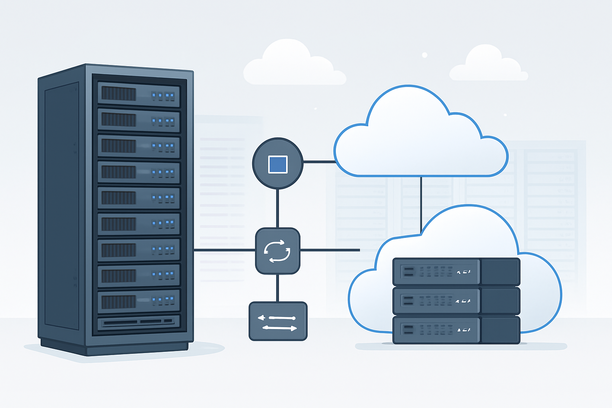
Overview
Setting up an AI detector on a server allows you to integrate powerful, private, and scalable content screening into your applications, workflows, or research. This process involves selecting the right hardware, preparing the server environment, choosing a detection tool, installing it securely, and optimizing its configuration for your specific use case.
Why Host an AI Detector on Your Own Server?
Hosting your own AI detector provides full control over data privacy, processing latency, and customization. When you run detection models on your server, sensitive text data never needs to leave your infrastructure, which is critical for industries with strict compliance requirements. Self-hosting also eliminates API rate limits and per-query costs, making it economical for high-volume text analysis.
The server choice directly impacts detector performance. For CPU-based statistical detectors, a standard VPS suffices. For GPU-accelerated transformer models, you need a machine with adequate VRAM and memory. The table below summarizes key considerations:
| Detector Type | Server Requirement | Ideal For |
|---|---|---|
| Statistical/Linguistic | CPU, 2+ cores, 4GB+ RAM | High-volume, real-time screening with low latency |
| Lightweight ML | CPU, 4+ cores, 8GB+ RAM | Balanced accuracy and speed for moderate workloads |
| Transformer-based (GPU) | NVIDIA GPU (4GB+ VRAM), 16GB+ RAM | Highest accuracy for nuanced detection tasks |
How Do I Choose the Right Server Hardware for an AI Detector?
Your hardware choice depends on the detector’s architecture and your performance needs. For statistical methods like those analyzing token frequency or perplexity, a modest CPU-based VPS or cloud instance is sufficient. These models prioritize speed over raw accuracy.
If you plan to deploy transformer-based models (e.g., variations of BERT or RoBERTa fine-tuned for AI detection), a GPU-equipped server becomes essential. These models require significant VRAM to load and run inference efficiently. A server with 8GB or more of VRAM and 16GB of system RAM can handle most open-source detection models smoothly.
For high-traffic production environments, consider dedicated servers to avoid noisy-neighbor performance issues. Providers like RAKsmart offer both GPU-accelerated cloud instances and dedicated servers with specific NVIDIA cards, allowing you to match hardware to model requirements precisely.
How Do I Prepare the Server Environment?
Before installation, prepare your Linux server with essential software and security configurations.
Start by updating your system and installing Python, pip, and essential development libraries. For a Debian/Ubuntu-based server, run:
sudo apt update && sudo apt upgrade -y
sudo apt install python3-pip python3-dev python3-venv -y
Create a dedicated non-root user for managing the detector service. Set up a Python virtual environment to isolate dependencies:
python3 -m venv ~/ai-detector-env
source ~/ai-detector-env/bin/activate
Secure your server by configuring a firewall. If using a cloud provider’s security groups or the local UFW firewall, open only necessary ports (e.g., SSH, your API port) and restrict other access. For guidance on setting firewall rules, you can refer to how security groups are configured on cloud platforms.
Which AI Detector Should I Use: Open-Source or API?
You have two primary paths: deploying an open-source model or building an API wrapper for a cloud-based detector service. Your choice depends on customization needs, budget, and data sensitivity.
Open-source tools like GPTZeroX or OpenAI Text Classifier (when self-hosted) give you complete control. You can fine-tune models on your own data, modify the code, and incur no ongoing API costs beyond your server expenses.
Cloud API wrappers offer ease of use but send data to external endpoints. They are better for prototyping or if you lack infrastructure maintenance resources.
The decision framework below can guide your choice:
- Choose open-source self-hosted if:
- Data privacy is paramount (e.g., legal, academic, or confidential content).
- You need to customize the detector for a specific writing style or domain.
- You have high-volume detection needs where API costs would be prohibitive.
- You have in-house expertise to manage and update the server and model.
- Choose a cloud API if:
- You are in early development and need quick integration.
- Your volume is low to moderate, and operational overhead is a concern.
- You prioritize simplicity over maximum control or customization.
How Do I Install and Run an Open-Source AI Detector?
This example uses a generic Python-based detector. The process typically involves installing from a repository or package manager, downloading model weights, and starting a local server.
- Clone or install the detector: Find the project repository (e.g., on GitHub) and clone it or install it via pip.
 git clone
 cd ai-detector
pip install -r requirements.txt- Download models: Some projects require you to download pre-trained model files separately.
- Run the inference server: Most tools provide a script to launch a local HTTP or gRPC server. This makes the detector accessible via API calls.
python run_server.py --port 8080- Test the endpoint: Use
curlto send a sample text and verify a response.
curl -X POST -H "Content-Type: application/json" -d '{"text": "Your text to analyze here."}'How Do I Secure and Maintain the Detector Service?
Security and maintenance are critical for a production deployment.
- Firewall & Access Control: Ensure only your applications or IP addresses can access the detector’s API port. Use the server’s firewall and any cloud-provided security groups to restrict inbound traffic.
- Reverse Proxy: Place Nginx or Caddy in front of your detector service to handle TLS termination, request logging, and basic load balancing. This adds a critical security layer.
- Process Management: Use
systemdto run the detector as a service, ensuring it starts on boot and restarts on failure. - Updates: Regularly update your server packages and the detector’s code/models to patch security vulnerabilities and improve accuracy.
For troubleshooting server-level issues, like recovery after a misconfiguration, knowing how to use tools such as rescue mode is invaluable. It allows you to boot into a temporary environment to repair your system or back up data.
Detector Server Setup Checklist
- Select server hardware (CPU/GPU, RAM) based on detector model.
- Install a supported OS (Ubuntu, Debian, CentOS) and update all packages.
- Create a dedicated user and set up a Python virtual environment.
- Configure firewall rules to allow SSH and the detector API port.
- Install detector software and dependencies.
- Download necessary model weights.
- Start the detector service and test the API endpoint.
- Set up process management (e.g., systemd service file).
- Implement a reverse proxy (e.g., Nginx) with TLS.
- Establish a routine for updates and log monitoring.
What Are Common Server-Side Challenges and Solutions?
When running AI detectors on a server, you may encounter specific issues. For example, on Windows Server, certain system configuration changes can lead to unexpected behavior, such as loss of desktop access. Understanding these platform-specific quirks is part of server management. Resources like guides on fixing Windows desktop access issues can be useful for comprehensive troubleshooting.
Another common challenge is resource contention. If your detector shares a server with other applications, you must monitor CPU, RAM, and GPU usage to prevent slowdowns. Using containerization (Docker) can help isolate the detector’s resources and simplify dependency management.
Conclusion
Deploying an AI detector on your server grants you unparalleled control over private, scalable, and customized content analysis. The process hinges on matching hardware to your model’s requirements, carefully preparing a secure Linux environment, selecting the right open-source tool, and implementing robust maintenance practices. By following a structured approach—from hardware selection through to security hardening—you can build a reliable detection service tailored to your specific needs.
Once your server environment is prepared, exploring scalable hosting options can provide the performance and reliability needed for production AI workloads. You can review available infrastructure from providers like RAKsmart to find a plan that aligns with your performance and budget criteria.
Frequently Asked Questions
Can I run an AI detector on a basic shared hosting plan?
No, shared hosting is not suitable. AI detectors require consistent access to server resources like CPU, RAM, and often GPU. They need to run custom software, open network ports, and operate continuously as background services, which is not supported on shared hosting platforms.
What Linux operating system is best for an AI detection server?
Ubuntu LTS (Long Term Support) or Debian Stable are excellent choices. They offer a vast software repository, extensive community support, and a predictable update cycle, which is crucial for maintaining a stable production server.
How much bandwidth does an AI detector server consume?
Bandwidth usage depends on text volume and size. Processing millions of short messages (like tweets) uses less bandwidth than analyzing long documents. Monitor your server's network traffic through your provider's dashboard to set appropriate bandwidth alerts and limits.
Is it possible to fine-tune the AI detection model on my server?
Yes, one of the main advantages of self-hosting is the ability to fine-tune models. You can train the model on your own labeled dataset (texts marked as human-written or AI-generated) to improve accuracy for your specific content domain. This requires additional GPU resources for the training process.
How do I monitor the health and performance of my AI detector service?
You should monitor several key metrics: API response latency, error rates, CPU/RAM/GPU utilization, and disk I/O. Tools like Prometheus with Grafana, or cloud-native monitoring services, can collect these metrics. Setting up alerts for high latency or resource saturation ensures you can address issues before they impact users.