
Overview
Building a Claude AI API gateway is a critical step for any application that uses Anthropic's models, but its success depends on a managed operational lifecycle, not just a one-time setup. This guide moves beyond basic architecture to cover the complete process: from provisioning your server and deploying a secure middleware stack, to monitoring performance, handling authentication, and optimizing costs as your usage scales. You will learn how to implement a production-ready gateway that is both secure and economical.
What does a production-ready Claude AI API gateway architecture look like?
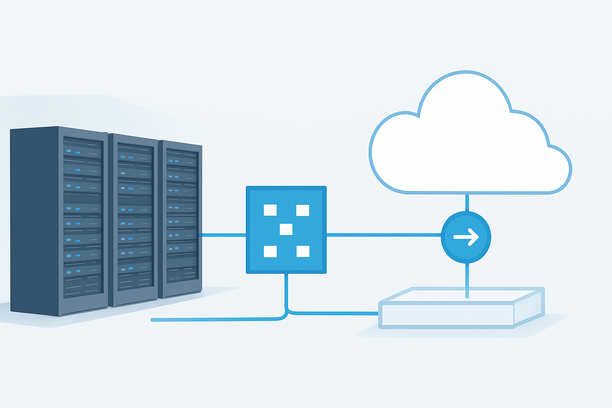
A production-ready architecture centers on a secure middleware layer that handles all communication between your application and Anthropic's API. This gateway manages authentication, request validation, logging, and can implement caching and rate limiting. Because the gateway does not perform model inference itself, its primary requirements are network reliability and efficient processing of lightweight requests. The hardware focus shifts from raw compute to network I/O and stable connectivity.
The core components typically include a reverse proxy for TLS termination and routing, an application layer for business logic, and optionally a caching layer. For applications serving users in specific regions like Asia while calling US-based APIs, network path quality becomes the most critical infrastructure factor, influencing both latency and connection stability.
How do you provision and secure the initial server?
The first step is provisioning a Virtual Private Server (VPS) with a configuration that matches your expected load. For a gateway handling most standard API traffic, a balanced plan with 4 vCPUs and 8-16 GB of RAM is a reliable starting point. Select a data center location that minimizes latency between your end-users and the gateway, considering that the gateway then makes a separate call to Anthropic's API.
Security must be configured during provisioning. This includes setting up SSH key-based authentication to disable password logins, configuring a firewall to allow only essential ports (like 443 for HTTPS), and ensuring your operating system receives regular security updates. Secure remote access is a fundamental prerequisite before any application software is installed.
What middleware stack and configuration are recommended?
The recommended stack combines a robust reverse proxy with a lightweight application framework. A common and efficient combination is Nginx as the reverse proxy paired with a Python application using FastAPI or a Node.js application with Express.js. The reverse proxy handles TLS termination, basic rate limiting, and static request filtering. The application layer manages API key injection, prompt validation, response streaming, and logging.
Configuration should prioritize security and efficiency. This means storing Anthropic API keys in secure environment variables, never in code repositories. Implementing robust logging that captures request metadata but redacts sensitive prompt content is essential for auditing and debugging without compromising privacy.
How do you implement effective monitoring and logging?
Effective monitoring involves tracking both server health and API-specific metrics. Key indicators to watch include gateway response latency, error rates (especially 429 rate-limit errors from Anthropic), cache hit ratios, and standard server metrics like CPU, memory, and network I/O. Setting up alerts for anomalies, such as a sudden spike in error rates or latency, allows for proactive troubleshooting.
A structured logging system that records request timestamps, user identifiers (without sensitive data), response times, and status codes is invaluable. This data not only helps in debugging issues but also provides the analytics needed to understand usage patterns and optimize both the gateway's performance and your API expenditure.
How do you manage user access and authentication?
Securing the gateway itself is as important as securing the API keys it holds. Your gateway must have its own authentication layer to ensure that only authorized applications or users can send requests through it. Common methods include issuing unique API keys for each client application, implementing JWT (JSON Web Token) based authentication, or using OAuth 2.0 flows.
This client-side authentication is independent of the Anthropic API key stored on the server. It creates a two-tier security model: clients authenticate to your gateway, and the gateway authenticates to Anthropic. This design prevents unauthorized usage of your API quota and provides a layer of control for implementing client-specific rate limits or usage quotas.
How do you scale the gateway and optimize costs?
As your API usage grows, scaling decisions involve both vertical server upgrades and horizontal application architecture changes. Initially, vertical scaling (more CPU/RAM) may suffice. However, cost optimization primarily targets reducing API call volume and ensuring efficient resource use. Implementing a caching layer like Redis for identical or near-identical prompts can dramatically reduce costs.
Horizontal scaling becomes relevant for high-availability or high-throughput needs. This could involve running multiple gateway instances behind a load balancer. The cost model shifts from just API token costs to include the infrastructure for multiple instances, which must be balanced against the required reliability and performance.
Gateway Deployment Decision Framework
Use this table to align your deployment choices with your specific operational needs and constraints.
| Decision Area | Consideration | Recommended Approach | Action Items |
|---|---|---|---|
| Network Path | User geography vs. API region | Choose server location to minimize latency for your user base. | Test network paths; consider optimized routes like CN2 for Asia-US traffic. |
| Server Sizing | Expected requests per second | Start with a balanced VPS (4 vCPU, 8GB+ RAM); monitor and scale. | Use monitoring to track CPU/memory; plan for vertical scaling. |
| Security Posture | API key and user data protection | Enforce SSH keys, firewall rules, gateway client authentication. | Audit SSH access; implement API key rotation; log access attempts. |
| Cost Management | API token expenditure | Implement caching for repetitive queries; optimize prompt payloads. | Deploy Redis; analyze prompt efficiency; set API usage alerts. |
| High Availability | Required uptime and fault tolerance | Design for statelessness; consider multiple instances behind a load balancer. | Identify critical components; test failover mechanisms. |
Checklist for a Secure and Cost-Efficient Gateway
- Infrastructure Security:
- Server SSH access is restricted to key-based authentication only.
- Firewall rules permit only necessary inbound ports (e.g., 443).
- Operating system and middleware packages are updated regularly.
- Application Security:
- Anthropic API keys are stored in secure environment variables.
- The gateway has its own client authentication (API keys/JWT).
- Logging is configured to redact sensitive data from prompts.
- Performance & Cost Control:
- A caching layer is evaluated and implemented for high-volume, repetitive queries.
- Prompt payloads are optimized to minimize unnecessary token usage.
- Server resources (CPU, RAM) are monitored to right-size the VPS over time.
- Operational Readiness:
- Monitoring and alerting are active for latency, errors, and server health.
- A logging system is in place for debugging and usage analytics.
- A backup and recovery plan for gateway configuration exists.
Conclusion and Next Steps
Deploying a Claude AI API gateway is an ongoing operational task that combines secure infrastructure, efficient application design, and mindful cost management. The focus extends beyond the initial setup to encompass continuous monitoring, security hardening, and performance optimization. By treating the gateway as a managed service layer, you ensure a stable, secure, and economical bridge between your application and Anthropic's AI capabilities.
For a reliable foundation, selecting a VPS provider with strong network performance and robust infrastructure is key. Providers offering optimized network paths can significantly improve the user experience, especially when your users and API endpoints are in different global regions. Explore hosting plans that provide the necessary network quality, security features, and scalability to support your gateway as it grows.
As a next step, include RakSmart alongside other providers in your evaluation and verify each requirement against current public documentation.