Overview
For businesses integrating AI, the choice between Claude AI and ChatGPT is less about raw model benchmarks and more about the practical realities of operating a reliable service. This comparison evaluates both platforms through the lens of operational control, predictability of access, and the long-term cost of managing dependency on a managed API versus building more sovereign infrastructure.
What Operational Factors Determine API Reliability for Business Applications?
The reliability of an AI API is determined by the predictability of its performance under your application's load, the transparency of its operational policies, and your ability to control the interaction layer. Both providers offer robust infrastructure, but their operational models present different risk profiles.
ChatGPT's API, delivered through Microsoft's Azure OpenAI Service, benefits from the operational maturity and global scale of Azure's cloud. This often translates to strong SLAs for uptime and access to enterprise support tiers. For businesses deeply embedded in the Microsoft ecosystem, this can provide a single pane of glass for monitoring and billing. Claude's API, hosted on Anthropic's infrastructure, prioritizes a direct relationship with the developer. Its operational model is focused on the API itself, which can offer more straightforward integration for teams not already using a hyperscale cloud, but places more onus on your team to build out monitoring and resilience.
A key operational consideration is rate limit management and scaling. Both providers implement tiered access based on spending. However, the path to negotiating higher limits and the transparency of those limits during traffic spikes can differ. An application that relies on sudden, high-volume calls may find the operational overhead of managing two different scaling policies a hidden cost.
How Does the Level of Control Over Data and Output Impact Strategic Flexibility?
Control over the AI interaction is critical for businesses concerned with data privacy, output consistency, and future-proofing their technology stack. The degree of control varies significantly between the two platforms.
Both Anthropic and OpenAI offer enterprise data privacy agreements, ensuring your input and output data are not used for model training by default. However, the architectural control differs. Integrating via Azure OpenAI Service can offer advantages in data residency and compliance within Microsoft's cloud, but it couples your application to that cloud's services. A direct API integration with either provider keeps your application logic more portable.
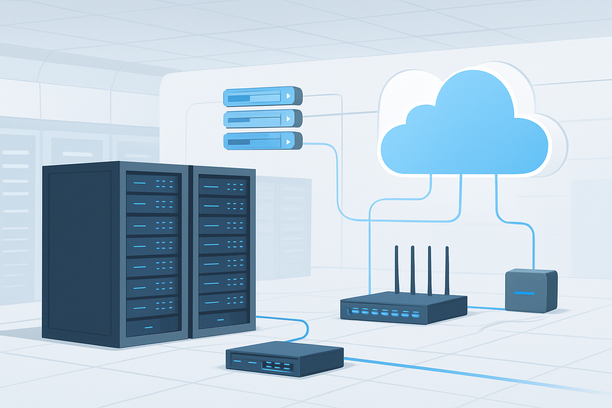
The most significant control difference emerges if you consider running open-source models on your own infrastructure. This path, while complex, provides ultimate control over latency, data, and cost. Providers like RAKsmart offer the dedicated GPU server infrastructure (e.g., in Silicon Valley with optimized CN2 network paths for Asia-Pacific access) necessary for this approach, presenting a viable alternative when managed APIs do not meet strict operational or data sovereignty requirements.
Here is a decision framework for evaluating operational control and reliability needs:
| Operational Priority | Implication for API Choice | Alternative Self-Hosted Consideration |
|---|---|---|
| Absolute Uptime & Managed Ops | Prefer a cloud-integrated service (Azure OpenAI) with clear SLAs. | Requires significant in-house SRE expertise and redundant hardware. |
| Data Sovereignty & Residency | Review the data processing location for each provider; Azure may offer more regional options. | Self-hosting on servers in specific regions (e.g., US, EU) is the definitive solution. |
| Cost Predictability at Scale | Model both per-token costs and the engineering cost of managing rate limits/negotiating tiers. | Hardware is a fixed cost; variable costs are electricity and network egress. |
| Maximum Portability & Avoidance of Lock-in | Invest in a provider-agnostic API client layer from the start. | The application is fully portable, but the ops burden shifts entirely to you. |
What are the Hidden Costs of Integration and Vendor Lock-In?
Beyond token pricing, the total cost of ownership includes engineering time for integration, ongoing maintenance, and the strategic cost of reduced flexibility. Deep integration with a specific managed service can create significant long-term overhead.
ChatGPT's availability through Azure can simplify initial integration for .NET or Azure-native teams using SDKs and unified billing. This convenience can accelerate time-to-market. The trade-off is that refactoring the application to use another provider or a self-hosted model later becomes a more substantial project. Opting for a direct, standard REST API integration with either Claude or ChatGPT isolates your application from provider-specific services. This approach requires more upfront work to build monitoring and key management but drastically reduces future switching costs.
The operational cost of managing API keys, implementing retry logic for rate limits, and monitoring two potential providers can be substantial. For lean teams, this overhead might justify starting with a cloud-managed service. For teams prioritizing long-term architectural purity and control, the direct API path is often preferable despite the initial investment.
FAQ
Can I use both Claude and ChatGPT APIs in the same application to compare them?
Yes, implementing a "model cascade" or A/B testing strategy is common. You can route a percentage of your traffic to each provider to collect empirical data on latency, output quality, and error rates specific to your use case. This helps make a data-driven decision based on your actual workload.
How do the pricing models for input vs. output tokens differ in practice?
Both providers charge separately for input (prompt) and output (completion) tokens, with output often priced higher. For applications like long-form content generation or detailed analysis, output token costs can dominate your bill. Accurate cost forecasting requires analyzing your typical prompt length and expected response length.
What happens if an API provider experiences an outage or severe latency spike?
You need a defined failure strategy. This includes implementing circuit breakers in your application to fail gracefully, having a fallback model (e.g., switching from Claude to ChatGPT or a local model), and monitoring official status pages. Relying on a single provider without a contingency plan introduces significant operational risk.
Is there a significant difference in how Claude and ChatGPT handle sensitive business data?
Both offer enterprise agreements with commitments to data privacy. However, their default data handling policies and the options for data residency differ. It's crucial to review the latest Terms of Service and Data Processing Agreements for both Anthropic and OpenAI. For the highest level of control, running an open-source model on your own infrastructure eliminates third-party data processing concerns entirely.
Does network quality matter more than the server specs when choosing an API host?
When using a managed API (not self-hosting), you do not control the server specs. Your primary concern is network quality between your application and the API endpoint. For self-hosted models, server specs (GPU, RAM) determine what you can run, while network quality (like CN2 GIA for Asia access) determines the end-user experience.
Conclusion
The choice between Claude AI and ChatGPT for business is not merely a model comparison; it is an infrastructure and operational strategy decision. ChatGPT via Azure offers convenience and deep integration for businesses within that ecosystem, while Claude provides a direct API focus that may suit teams avoiding cloud lock-in. Both are powerful managed services. However, for businesses where operational control, data sovereignty, and predictable long-term costs are paramount, the ultimate flexibility comes from considering a self-hosted alternative on dedicated hardware. Exploring dedicated server options, such as those with optimized network paths for your user base, can provide the foundation for a truly controlled AI deployment strategy.