
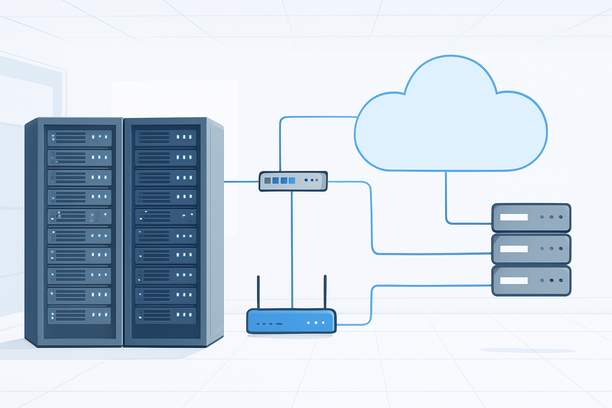
Selecting a dedicated server for hosting ChatGPT-class models is not a one-size-fits-all decision; it depends heavily on your project's scale, user geography, and operational maturity. This comparison framework moves beyond generic specs to help you match server configurations—from GPU and network to cost structures—to distinct deployment scenarios, ensuring your infrastructure supports both current performance and future growth.
Overview: What Core Factors Define a ChatGPT Dedicated Server Comparison?
A dedicated server comparison for ChatGPT AI inference centers on three pillars: GPU hardware tailored to model size, network architecture optimized for user latency, and cost models aligned with utilization patterns. The right choice differs for a startup prototype versus an enterprise production system, making scenario-based evaluation essential for technical and financial success.
How Do You Assess Your Workload Requirements Before Comparing Servers?
Before comparing specific servers, clearly define your workload parameters to avoid over-provisioning or underperformance. Key questions include model size in parameters, expected concurrent users, and primary user locations, as these directly dictate GPU memory, network bandwidth, and data center selection.
Critical Workload Factors:
- Model Scale: Smaller models (7B-13B parameters) require less VRAM and compute, while larger models (70B+) demand high-memory GPUs.
- Concurrency: High traffic volumes necessitate GPUs with faster inference speeds and robust network throughput.
- User Geography: Concentrated user bases in regions like North America or Asia influence data center location choices for low latency.
For instance, a startup testing a fine-tuned 13B model for a niche application has different needs than an enterprise deploying a 70B model globally, making upfront workload assessment the foundation of any comparison.
Which GPU Configurations Suit Different Model Scales?
The GPU determines inference speed and model capacity, so comparisons must align with your parameter count and throughput needs. NVIDIA's data center lineup offers tiered options that cater to varying scales.
| GPU Model | VRAM (GB) | Ideal Workload Scenario | Comparison Advantage |
|---|---|---|---|
| NVIDIA A30 | 24 | Fine-tuned 7B-13B models for targeted applications | Cost-effective entry point for small-scale deployments. |
| NVIDIA A100 40GB | 40 | Production-grade 30B-50B models with moderate concurrency | Balanced performance and cost for most business use cases. |
| NVIDIA A100 80GB | 80 | Large 70B+ models or multi-model hosting | Maximum memory for high-demand, concurrent inference. |
| NVIDIA H100 | 80 | Next-gen, latency-sensitive applications with top-tier speed | Premium performance for cutting-edge, real-time interactions. |
For example, a content generation startup might start with NVIDIA A30 GPUs for efficiency, while an AI service provider handling multiple client models could justify NVIDIA A100 80GB servers for flexibility.
How Does Network Quality Impact the Comparison Across Locations?
Network performance is a critical differentiator in server comparisons, as it directly affects response latency and user satisfaction. Evaluations should consider data center proximity, peering quality, and bandwidth options.
Network Comparison Factors:
- Data Center Location: Servers in Los Angeles or Tokyo serve regional users faster than those in distant locations, reducing latency from 50ms to under 20ms for nearby users.
- Peering and Routes: Providers with direct peering to major ISPs and cloud networks ensure stable, low-latency paths, avoiding public internet congestion.
- Bandwidth Tiers: High-bandwidth options, such as those available in dedicated server promotions, support data-intensive AI inference without overage costs.
For applications requiring low-latency global access, comparing network architectures—including multi-IP configurations for load balancing—can optimize performance. Providers like RAKsmart offer dedicated servers with 1G or 10G high bandwidth deals, which can be advantageous for workloads with heavy outbound traffic, though selection should be based on verified network details rather than generic assumptions.
What Cost Models Make Sense for Different Deployment Stages?
Comparing cost structures involves analyzing fixed versus variable expenses relative to utilization. Dedicated servers operate on predictable monthly fees, while APIs or cloud instances use pay-as-you-go models, making total cost of ownership (TCO) a key comparison metric.
| Cost Factor | API/Cloud GPU Model | Dedicated Server Model | Best For Scenario |
|---|---|---|---|
| Primary Expense | Variable per-token or per-hour fees | Fixed monthly hardware rental | API for low/bursty usage; dedicated for high/consistent usage. |
| Included Resources | Often bundled with usage rates | Typically includes power and base bandwidth | Dedicated servers for predictable scaling; API for zero upfront cost. |
| Scaling Cost | Instant, linear scaling | Requires new hardware procurement | API for unpredictable growth; dedicated for planned expansions. |
| Management Overhead | Provider-managed infrastructure | Self-managed OS, security, and maintenance | API for teams lacking DevOps expertise; dedicated for full control. |
For instance, a startup with sporadic development needs might prefer API costs, whereas an enterprise with steady, high-volume inference could achieve lower TCO with dedicated servers over time.
Decision Framework: Matching Your Scenario to the Right Server
Use this checklist to guide your server comparison based on specific deployment scenarios.
Choose a dedicated server with NVIDIA A100 80GB or H100 GPUs if:
- Your model exceeds 70 billion parameters or you host multiple large models.
- You need high concurrency and ultra-low latency for real-time applications.
- Your team has DevOps expertise for managing security, monitoring, and maintenance.
- Budget allows for a fixed monthly investment aiming for long-term cost efficiency.
Choose a dedicated server with NVIDIA A30 or A100 40GB GPUs if:
- Your model is in the 7B to 50B parameter range with moderate traffic.
- You are optimizing for cost efficiency on a single, well-defined workload.
- User base is predictable and scalable in increments of whole servers.
Continue with API or cloud instances if:
- Your workload is experimental, bursty, or highly unpredictable.
- You prioritize development speed and zero operational overhead.
- In-house infrastructure management skills are limited.
Network selection should prioritize:
- Locating servers in data centers close to your primary user geography.
- Evaluating providers for transparent network peering and optional high-bandwidth upgrades to match traffic profiles.
Conclusion: Align Comparison with Real-World Needs
Comparing dedicated servers for ChatGPT AI inference requires a scenario-based approach that ties GPU power, network quality, and cost to your specific deployment stage and workload. By assessing your model scale, user location, and operational capacity, you can select infrastructure that balances performance and expenditure. For those ready to evaluate options, exploring dedicated server configurations from providers like RAKsmart can provide concrete hardware choices; checking current offerings such as the Dedicated Servers Flash Sale may reveal timely opportunities to align with your comparison framework.
Frequently Asked Questions
What is the first step in comparing dedicated servers for ChatGPT inference?
The first step is to define your workload requirements, including model parameter count, expected concurrency, and primary user locations. This ensures your comparison focuses on relevant GPU, network, and cost factors rather than generic specifications.
How do I decide between NVIDIA A100 and H100 GPUs in a comparison?
Choose NVIDIA A100 GPUs for cost-effective performance in most production scenarios, especially for models up to 70B parameters. Opt for NVIDIA H100 GPUs if you require top-tier speed for cutting-edge, latency-sensitive applications and have the budget for premium hardware.
Can network location significantly affect ChatGPT response times in a server comparison?
Yes, data center proximity directly impacts latency; a server in Los Angeles will serve North American users with lower ping times than one in Frankfurt, making location a critical comparison factor for real-time AI applications.
Is managing a dedicated server more complex than using an API?
Managing a dedicated server involves higher complexity, requiring OS setup, security hardening, and AI framework configuration, but it offers greater control and potential cost savings at scale compared to the simpler API model.
When should I consider upgrading my dedicated server's GPU in a comparison?
Consider upgrading when your model size increases beyond current VRAM limits, or when demand for concurrent inference grows, requiring faster compute; re-evaluate your server comparison annually or at significant workload milestones.