
Overview
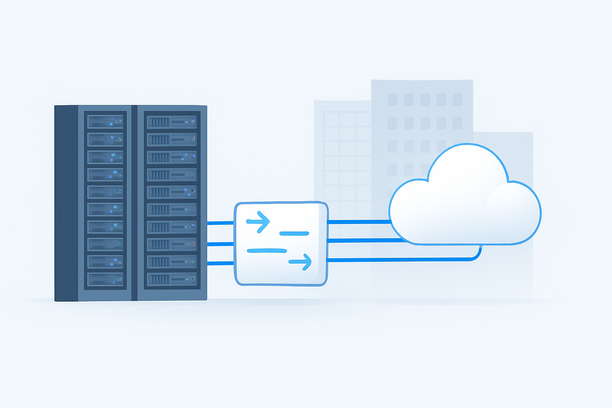
When building an application that calls Anthropic's Claude models via API, the hosting location for your middleware or gateway server is a critical, often underestimated, decision. The dominant factor is not CPU or RAM, but the network path and latency between your server and Anthropic's API endpoints. A server in the optimal location with a premium network route can reduce API call latency by 50-100 milliseconds, a difference users instantly feel. This article examines why network geography dictates performance for Claude API projects, provides a decision framework for selecting the right hosting infrastructure, and explains how to validate your choice to ensure your application feels fast and reliable.
Does My Claude AI Project Really Need a Specialized Server?
Yes, but not for the reasons you might think. For most projects calling Claude's API, the server runs lightweight middleware—a reverse proxy, authentication logic, and a cache—not the model itself. The specialized requirement is a low-latency, high-reliability network connection to Anthropic's cloud infrastructure. Your server's job is to be a fast, stable bridge, and a poor network path makes it a bottleneck. If your users experience delayed responses or intermittent timeouts, the issue is frequently the journey of the data packet, not the processing power of the server handling it.
Why Network Latency is the Primary Performance Metric for API Gateways
The entire user experience for a chat or AI-powered feature hinges on the round-trip time (RTT) from the user's device to your server, plus the RTT from your server to Anthropic's API, plus the model's processing time. You can optimize code and choose faster models, but you cannot change the physics of data traveling across congested or circuitous internet routes.
For real-time AI applications, added latency is directly perceived as slowness. An additional 200ms of network delay can be the difference between a fluid conversation and a frustrating lag. Therefore, hosting your gateway server on a network path optimized for stability and low latency is the single most impactful infrastructure decision you can make.
Key network factors to consider:
- Proximity to API Endpoints: Anthropic's API is hosted in the United States. A server located in US East (e.g., Ashburn, Virginia) will have a shorter, more direct path than one in Europe or Asia, all other factors being equal.
- Network Route Quality: Not all internet paths are the same. A standard BGP route may involve multiple hops and congested peering points. Premium network lines, such as those leveraging optimized paths for trans-Pacific traffic (like CN2 GIA), provide a more direct and stable route with lower packet loss, which is crucial for maintaining consistent connection quality.
- Consistency vs. Peak Speed: A connection with a stable 150ms latency is often preferable to one that fluctuates between 80ms and 300ms. Unpredictable latency causes jitter, which breaks streaming responses and degrades real-time interactions.
A Practical Checklist for Selecting Your API Hosting Infrastructure
Use this framework to evaluate potential hosting solutions for your Claude AI API project. Prioritize network attributes over raw hardware specifications unless you are running your own local models.
- Primary User Geography: Where are the majority of your end-users located? Choose a hosting location that minimizes the aggregate latency for your primary user base to your server.
- API Call Volume & Pattern: Estimate your requests per second. High-volume, concurrent calls demand a server with sufficient network throughput (1 Gbps+) and a CPU capable of handling many simultaneous TLS connections.
- Network Route to Anthropic: Does the hosting provider offer transparent information about its network? For users in Asia connecting to US-based Claude APIs, look for providers with explicitly optimized trans-Pacific routes. Providers offering "CN2" or "China-optimized" networks can significantly reduce latency and packet loss for users in mainland China.
- Uptime & SLA Requirements: Mission-critical applications need infrastructure with a proven 99.9%+ uptime track record and a clear Service Level Agreement.
- Scalability Path: Ensure you can vertically upgrade (more RAM/CPU) or horizontally scale (add load balancing) as your API traffic grows without changing providers.
Comparing Network Types: How Route Quality Impacts Claude API Hosting
The type of network your hosting provider uses is often more important than the server's hardware tier. A basic comparison illustrates why network quality is paramount for API workloads.
| Feature | Standard International BGP | Premium Optimized Network (e.g., CN2) |
|---|---|---|
| Typical Latency (Asia to US) | 180ms – 280ms | 130ms – 170ms |
| Route Stability | Variable; can congest at peak times | Higher stability; dedicated paths |
| Packet Loss Risk | Moderate; especially during congestion | Low; designed for critical traffic |
| Impact on Streaming | Higher chance of buffer/breakage | Smoother, more reliable streams |
| Best For | Cost-sensitive, non-real-time applications | Latency-sensitive AI applications, production gateways |
As shown, a premium network route can halve the latency compared to a standard route during congested periods. For a Claude API gateway, this reduction directly translates to faster response generation reaching your users.
Cost vs. Performance: Making the Final Hosting Decision
Balancing cost and performance is essential. While premium network locations come at a higher price, the investment often pays off in user retention and application reliability. Here’s how to approach the trade-off:
- Start with Network, Then Right-Size Compute: Begin by selecting a hosting location and network type that meets your latency requirements. For a standard API gateway, a mid-tier VPS (4 vCPU, 8-16GB RAM) is typically sufficient. Avoid over-provisioning compute resources while underspending on network quality.
- Consider the Total Cost of Poor Performance: Downtime or a consistently slow application leads to user churn. The cost of a slightly more expensive server with a better network is often less than the revenue lost from frustrated users.
- Leverage Caching to Reduce Calls: Implement a cache layer like Redis on your server. By caching frequent, identical prompts, you reduce the number of calls to Anthropic's API, saving both latency and money.
Providers like RakSmart, for instance, offer VPS plans with highlighted network optimizations, such as CN2 GIA routes, which are specifically designed to lower latency for traffic between Asia and US data centers. This can be a decisive factor for developers building AI applications with a global or Asia-Pacific user base.
Conclusion and Next Steps
Selecting infrastructure for Claude AI hosting is fundamentally a network engineering problem. The right choice ensures your application’s responses feel instant and reliable, turning a technical API into a compelling user experience. Prioritize network path quality and location proximity to Anthropic’s US endpoints, validate performance with real-world latency tests, and choose a provider that offers transparent network specifications and scalable options.
Explore hosting plans with optimized network routes and low-latency performance to build a robust foundation for your Claude AI project.
Frequently Asked Questions
Do I need a GPU server to host my Claude AI API gateway?
No. If your application only calls the Anthropic API and does not run local AI models, you do not need a GPU. A standard VPS with a strong CPU, sufficient RAM (8GB+), and a fast SSD is more than adequate. The bottleneck for API gateways is network performance, not GPU compute power.
Which hosting region is best for minimizing latency to Anthropic's API?
Anthropic's API is hosted in the United States. To minimize latency, choose a server in a US data center, particularly US East (e.g., Ashburn, Virginia) or US West (e.g., San Jose, California), as these are major network hubs with direct peering. The optimal choice also depends on your users' locations; a US East server often provides a good balance for global traffic.
How much does a 100ms latency reduction really matter for my application?
For interactive, conversational AI applications, it matters significantly. Human perception of "instantaneous" response is generally under 200ms. Reducing network delay by 100ms can move your application's response time from feeling sluggish to feeling responsive, directly impacting user engagement and satisfaction.
Can caching at the gateway level really reduce my Anthropic API costs?
Yes, effectively. By storing the responses to frequent, identical prompts (e.g., common FAQs, fixed template instructions), your gateway can serve a cached answer without making a new API call. This directly reduces your token usage and associated costs, while also improving response times for cache hits.
What are the biggest cost traps when setting up Claude API hosting?
The most common trap is over-provisioning CPU and RAM while choosing a cheap hosting plan on a congested, low-quality network. You pay for idle compute resources while your application suffers from poor user experience due to latency. Another trap is ignoring egress bandwidth costs; streaming many large responses can incur significant data transfer fees. Always review a provider's pricing for both compute and bandwidth.