
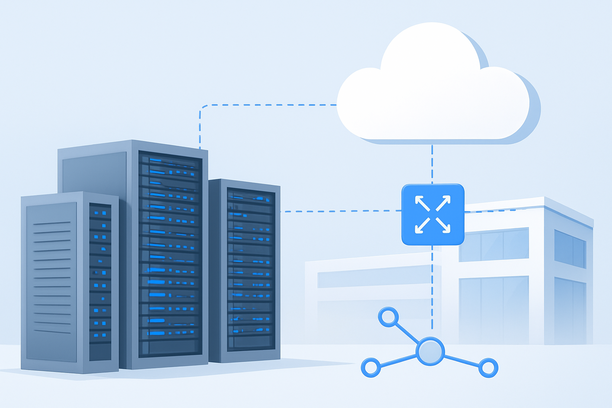
Deploying a robust backend for the Claude AI API extends beyond selecting an instance type. Your server's physical location and deployment model directly determine two critical success factors: the response latency your users experience and your legal compliance with data sovereignty regulations. The optimal hosting solution is not a one-size-fits-all answer; it's a strategic decision shaped by your user geography, data sensitivity, and performance requirements.
Overview
The query "claude ai api hosting" signals a need for infrastructure that acts as a reliable, low-latency intermediary to Anthropic's API while potentially safeguarding sensitive data within specific jurisdictional boundaries. A well-planned server deployment mitigates network lag, ensures data remains in approved regions, and provides the control needed for security and scaling. This article analyzes how to architect your hosting environment to tackle latency and data sovereignty head-on, moving beyond generic VPS versus dedicated server comparisons to focus on deployment-specific tactics.
Why Standard Hosting Advice Falls Short for AI API Backends
Generic hosting guidance often overlooks the unique demands of AI API traffic. A Claude API backend doesn't just serve static files; it manages authenticated, stateful conversations that are sensitive to delay. A few milliseconds of added network latency can translate into a noticeably sluggish user experience. Furthermore, if your application processes personal, financial, or regulated data, the physical server location dictates which legal frameworks apply, making geolocation a compliance requirement, not just a performance tweak.
Tackling Latency: The Physics of Your Server Location
Latency in a Claude API integration is primarily a function of network distance and route quality. Your server acts as a hop between your application's users and Anthropic's API endpoints.
User Proximity is Paramount: The single most effective way to reduce latency is to host your server in a data center geographically close to your primary user base. A server in Los Angeles will deliver faster responses to users on the US West Coast than one in Frankfurt.
Route Quality and Network Backbone: Physical distance isn't the only factor. The quality of the internet route between your server, your users, and Anthropic's infrastructure matters. A provider with direct peering to major cloud networks can offer a more stable, lower-latency path than one relying on congested public internet exchanges. This is where regional data center selection and network specifications become critical.
Addressing Data Sovereignty: Where Your Bits Legally Reside
Data sovereignty regulations, like the GDPR in Europe or various sector-specific rules, often mandate that certain types of data must be processed and stored within a defined geographic boundary. For Claude API applications, this means the server handling user prompts and API responses might need to be located within the EU, the US, or another specified region.
Implications for Your Architecture: This requirement fundamentally shapes your hosting choice. A global cloud provider with regions worldwide offers flexibility, but a dedicated server in a specific, legally compliant data center provides unambiguous control over data location. Simply "hosting in the cloud" isn't sufficient; you must explicitly select the correct cloud region or physical server location.
Deployment Models for Claude API: Matching Architecture to Requirement
The right deployment model depends on whether latency reduction, data sovereignty, or a balance of both is your primary driver.
The Cloud Region Strategy
Using a cloud compute instance (from providers like AWS, Google Cloud, or Azure) in the region closest to your users and with appropriate data residency certifications is the most flexible starting point. You can deploy instances in multiple regions to serve global users, but this adds complexity in synchronization and cost management.
The Dedicated Server Advantage
For stringent data sovereignty or maximum consistent performance, a bare-metal dedicated server in a specific, vetted data center offers the strongest guarantees. You have exclusive access to the hardware and full control over the network environment. This model is ideal when you must prove physical data location to an auditor or cannot tolerate any "noisy neighbor" performance variability.
The VPS as a Strategic Proxy
A Virtual Private Server (VPS) excels as an API gateway, load balancer, or cache layer. It can be deployed in a low-cost region to handle initial request filtering and authentication before forwarding valid requests to a more powerful, sovereign backend server. This two-tier architecture can optimize both cost and compliance.
Comparison: Deployment Models for Key Requirements
| Deployment Model | Best for Latency Optimization | Best for Data Sovereignty | Control & Isolation | Cost Predictability |
|---|---|---|---|---|
| Multi-Region Cloud | Excellent (deploy near users) | Good (must choose correct region) | High | Variable (pay-as-you-go) |
| Single Dedicated Server | Good (fixed location) | Excellent (physical, verifiable location) | Maximum | Fixed monthly fee |
| VPS Proxy + Dedicated Backend | Good (strategic placement) | Excellent (backend is sovereign) | High | Moderate, predictable mix |
Critical Server Specifications and Network Configuration
Beyond location, your server's technical specifications must support the workload.
- CPU and RAM: For a pure API proxy or lightweight middleware, modern multi-core CPUs and 8-16 GB of RAM are sufficient. For servers performing on-the-fly data processing or hosting a local caching layer, prioritize higher core counts and more memory.
- Network Throughput: Ensure a minimum of 1 Gbps port speed, with 10 Gbps preferred for handling high-throughput, streaming API responses. Consistent low-latency network performance is crucial.
- Security Fundamentals: DDoS protection, a configurable software firewall (like
iptablesorfirewalld), and mandatory SSL/TLS encryption for all API traffic are non-negotiable. Regular security patching of the underlying OS is essential.
Actionable Steps for Your Server Deployment
Once you've selected your provider and model, a methodical setup ensures a secure and functional backend.
- Provision and Initial Access: After purchasing your server, you'll receive credentials. The first step is to log in via SSH (for Linux) or RDP (for Windows) and secure your access by changing default passwords and setting up SSH key authentication.
- Domain and DNS Configuration: Register a domain for your API endpoint. As outlined in standard domain management guides, you will need to add DNS records (typically an A record pointing to your server's IP address) to route traffic correctly see Answers to Domain-Related Questions. Ensure your domain registrant information is complete and accurate to avoid activation delays per account details guidelines.
- Software Stack Installation: Install a reverse proxy like Nginx or Caddy, a runtime environment (e.g., Node.js, Python), and any necessary caching software (like Redis). This stack will manage incoming requests, handle SSL termination, and forward traffic securely to your backend application logic that interacts with the Claude API.
- Implement Monitoring and Logging: Set up basic monitoring for server health (CPU, RAM, disk usage) and application performance (response times, error rates). Comprehensive logs are vital for debugging and security audits.
Decision Framework: What Matters Most for Your Project?
Use this checklist to guide your hosting choice based on your specific priorities for latency and data sovereignty.
Primary Driver Assessment:
- Is user-perceived speed the absolute top priority for my application's success?
- Am I bound by legal or contractual data residency requirements for user data?
- Is my user base concentrated in a specific geographic area (e.g., North America, Europe)?
Workload and Control Requirements:
- Do I need to run additional services (like a database) alongside my API proxy that have their own latency needs?
- How important is bare-metal access and full hardware control for compliance audits?
- What is my team's capability to manage and secure an unmanaged server environment?
Based on your answers:
- If low latency for a global user base is the key, a multi-region cloud deployment allows you to place instances close to users.
- If provable data sovereignty is non-negotiable, a dedicated server in a specific, compliant data center provides the clearest answer.
- If you need both strategic latency reduction and a sovereign core, a VPS proxy for global traffic funneling to a dedicated sovereign backend is a powerful pattern.
Conclusion and Next Steps
Hosting a Claude AI API backend successfully requires moving beyond generic server specs to a strategic deployment focused on the physics of network latency and the legalities of data location. Your choice between a geographically dispersed cloud setup, a sovereign dedicated server, or a hybrid VPS architecture should be a direct response to your users' location and your data's compliance requirements.
For projects requiring a dedicated, sovereign server environment in key regions, exploring a provider like RakSmart can offer direct access to bare-metal hardware with the control needed for strict compliance scenarios. Evaluate their dedicated server plans in your target region to ensure your infrastructure foundation aligns with both your performance and regulatory goals.
Frequently Asked Questions
Does hosting my Claude API proxy closer to Anthropic's servers improve latency?
Hosting closer to Anthropic's API endpoints can reduce the latency of the API call itself. However, the most significant latency reduction comes from hosting your proxy closer to your end-users, as this minimizes the first and last mile of network travel for the bulk of your traffic. The optimal strategy is often to balance both, placing your server on a well-connected network backbone with good routes to both your user base and major cloud regions.
Can I use a shared hosting plan for a Claude AI API backend?
Shared hosting is not recommended for an AI API backend. Shared environments offer no performance guarantees, limited control over security configurations, and lack the isolation required for handling API keys and sensitive user data. A VPS or dedicated server provides the necessary performance, security, and control.
How does data sovereignty affect my choice between AWS and a dedicated server provider?
Cloud providers like AWS offer regional data centers, allowing you to select a region for deployment to meet data residency laws. A dedicated server provider gives you an even more explicit, physical commitment that your hardware and data reside in a specific data center. The choice often depends on your compliance audit requirements and whether you need the elastic scaling of the cloud or the consistent, dedicated resources of bare metal.
What is the minimum server specification for a Claude API proxy?
For a lightweight proxy handling authentication, rate-limiting, and caching, a VPS with 2 vCPUs, 4-8 GB of RAM, and a 1 Gbps network port is a solid starting point. If you plan to process or transform large amounts of data within the proxy, you will need to scale CPU and RAM accordingly.
Do I need a GPU server for hosting a Claude AI API backend?
A standard CPU-based server is sufficient if you are only acting as a proxy to the Claude API and not running any local machine learning models. GPU servers are required for tasks like running your own self-hosted AI models for inference or fine-tuning, which is a different and more resource-intensive workload than API proxy hosting.