
Overview
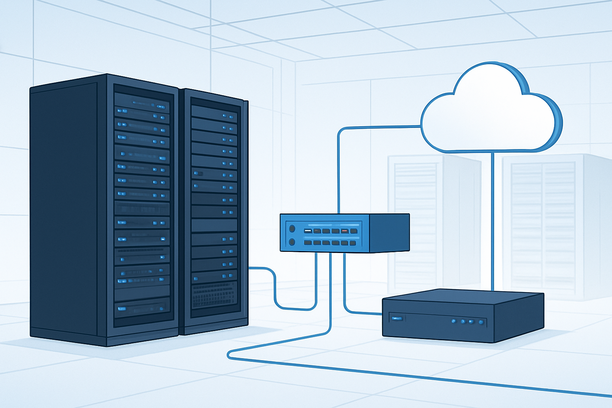
Achieving low latency for AI chatbots requires a multi-layered approach that addresses both the computational speed of the inference engine and the network path taken by user requests. The optimal infrastructure combines geographically proximate GPU servers, premium network routes like CN2 GIA for China traffic, and efficient model serving stacks to deliver responses that feel instantaneous to the user.
What Core Components Define a Low Latency Chatbot Stack?
A low latency chatbot infrastructure consists of three critical layers: the edge network for user access, the server hardware for model inference, and the software stack for request handling. Optimizing only one layer yields limited gains; true performance requires a holistic design.
The edge network determines the initial time-to-first-byte and the stability of the connection. Premium transit providers and direct peering reduce hops and congestion. The server hardware, specifically the GPU and its memory bandwidth, directly controls how fast the language model processes each token. Finally, the software stack—including model format, quantization, and serving frameworks like vLLM or TensorRT-LLM—determines how efficiently the hardware is utilized.
Network Path and Peering
The physical and logical path data takes from a user's device to the inference server is the largest variable in perceived latency. For global applications, the choice of data center and upstream providers is paramount.
Technical Rationale: For users in mainland China, traffic routed through standard international gateways often experiences variable latency (100-300ms+) and packet loss due to congestion and multiple peering points. A route using CN2 GIA (Global Internet Access), which leverages China Telecom's premium tier-1 backbone, provides a more direct, less congested path. This can reduce round-trip time (RTT) to as low as 30-80ms for eastern US regions, a critical factor for real-time chat. For users outside China, choosing a data center in a major peering hub (like Los Angeles, Tokyo, or Frankfurt) minimizes the number of autonomous system (AS) boundaries a packet must cross.
Hardware Selection: GPU and Beyond
The model's inference speed is measured in tokens per second and Time-to-First-Token (TTFT). These metrics are governed by GPU compute power (TFLOPS), VRAM capacity and bandwidth, and CPU performance for pre-processing.
For most chat applications, the bottleneck is memory bandwidth. High-end GPUs like the NVIDIA A100 or H100 with HBM2e or HBM3 memory are ideal. However, for cost-effective deployments, GPUs like the NVIDIA A40 or L40S offer a strong balance of FP16 and INT8 performance. The table below summarizes key trade-offs:
| GPU Model | VRAM | Memory Bandwidth | Best For | Cost Consideration |
|---|---|---|---|---|
| NVIDIA H100 SXM | 80 GB HBM3 | 3.35 TB/s | High-throughput, large models (70B+), lowest TTFT | Highest tier |
| NVIDIA A100 SXM | 80 GB HBM2e | 2.0 TB/s | Balanced performance, versatile model support | High tier |
| NVIDIA A40 | 48 GB GDDR6 | 696 GB/s | Cost-effective inference, medium models (7B-30B) | Mid tier |
| NVIDIA L40S | 48 GB GDDR6 | 864 GB/s | Enhanced AI performance vs A40, optimized for inference | Mid-High tier |
How to Architect the Server for Minimal Inference Delay?
The server architecture must eliminate software-based bottlenecks to fully leverage the GPU's capabilities. This involves optimized drivers, a dedicated inference runtime, and proper system configuration.
A common mistake is using a generic cloud instance without configuring the driver and CUDA stack for AI workloads. The operating system should be tuned for low-latency I/O (e.g., disabling unnecessary services, adjusting swappiness). The inference server (like TGI or vLLM) should be configured with tensor parallelism for larger models, continuous batching to maximize GPU utilization across multiple user requests, and quantization (e.g., GPTQ, AWQ) to reduce memory footprint and increase throughput without significant quality loss for most chat applications.
Which Data Center Location Offers the Best Balance?
The ideal data center location is determined by your primary user base. Placing the inference server in a location with strong, direct peering to that user base is the single most effective way to reduce latency.
For a global user base, a multi-region deployment with intelligent routing is necessary. For a China-focused service, a data center in a US West Coast hub like Los Angeles, which often has CN2 GIA links, provides a strong balance of direct connectivity. A provider like RakSmart offers servers in such locations, which can be a practical starting point for testing network performance to your target audience. Always verify network performance using tools like MTR to diagnose any packet loss or high latency along the route.
Decision Framework: Checklist for Evaluating Low Latency Hosting
Use this checklist to systematically assess hosting options for your AI chatbot infrastructure.
- Geographic Proximity: Does the data center location have short theoretical latency to your core user demographic?
- Network Quality: Does the provider offer premium network tiers like CN2 GIA for Asia? Are direct peering relationships (e.g., with major ISP's) advertised?
- GPU Selection: Does the available GPU match your model size and throughput needs? Is there a choice of GPU models?
- Configuration Control: Do you have root access to install and configure your preferred inference stack (vLLM, TGI) and CUDA drivers?
- Support for Diagnostics: Can you easily run network tests like MTR and traceroute from the server and to the server? Are there bandwidth monitoring tools?
- Pricing Transparency: Is the pricing model clear, without hidden fees for network overage or premium features?
Frequently Asked Questions (FAQ)
What network metric is most important for chatbot responsiveness?
The most critical metric is round-trip time (RTT) or ping latency between your end-user and the server. This directly impacts the delay before the first token of a response begins streaming. Consistent, low RTT is more important than peak throughput for a conversational feel.
Can I use a standard cloud VM for a low latency chatbot?
While possible, standard cloud VMs often share network and storage resources, leading to performance variability. For consistent sub-50ms latency, dedicated servers with guaranteed network bandwidth and premium upstream providers are recommended, especially for latency-sensitive, global applications.
How much does GPU choice affect end-user latency?
GPU choice has a massive impact. A high-bandwidth GPU like an H100 can generate tokens 3-5x faster than a mid-range GPU, directly reducing the time a user waits for a complete response. The GPU determines the maximum inference throughput and, combined with software, the first-token delay.
What is the role of quantization in reducing latency?
Quantization reduces model size (e.g., from FP16 to INT8), which allows it to fit in VRAM more efficiently and can increase inference speed. It reduces memory bandwidth pressure, leading to higher tokens-per-second throughput, which lowers the latency of generating the full response.
How do I diagnose if high latency is a network or server issue?
First, use MTR (My Traceroute) to analyze the path to the server. This tool shows latency and packet loss at each network hop, pinpointing congestion. If the network path is clean, the issue likely resides on the server, requiring profiling of GPU utilization and inference logs to identify a software or hardware bottleneck. For a guide on using MTR, you can refer to the Installation and Usage of MTR Tool.
Conclusion
Constructing a low latency infrastructure for AI chatbots is a deliberate engineering process, not a default hosting choice. It requires matching server location to user geography, selecting GPUs that can keep pace with model demands, and fine-tuning the network and software stack to remove every possible delay. Start by mapping your user base, then prioritize a data center with proven, premium network routes to that region. By methodically applying the checklist above, you can build a foundation that makes your AI conversations feel immediate and seamless. Explore hosting options that give you direct control over these critical performance layers.